
⚠️ Our phones are currently down. Please email us at info@brightstar.co.nz and we’ll get back to you as soon as possible. We apologise for the inconvenience.

CU190 Logo 2

23 - 24 June 2026
Cordis, Auckland

Federated Farmers & Brightstar proudly present the Primary Industries New Zealand Summit & Awards

Driving the future of the New Zealand primary industries

The Primary Industries New Zealand Summit and Awards continues to bring together the very best leaders from across the spectrum of New Zealand farming and primary sector business. This year the Summit will focus on understanding and seizing the opportunities of the future, with the event providing high level insights, analysis and debate around the key themes that will decide how effectively we meet the future challenges for the sector.

Key Themes

  • Examine the future of food and the high impact opportunities it will offer to New Zealand
  • Understand changing consumer and market trends to unlock high value future markets for NZ agriculture
  • Discuss how the sector can adapt and develop, deploying new business models and strategies to drive change through to 2025
  • Hear from political leaders in election year sharing their visions for the future of the primary industries
  • Hear the leaders of our major agricultural businesses sharing how their strategies for the future will drive sector growth
  • Explore the future of local government and review its role in supporting the development of changing rural communities and economies
  • Analyse the latest trade developments that will shape future market access
  • Learn how to leverage the new science, technologies, tools and innovations that will drive future productivity and growth

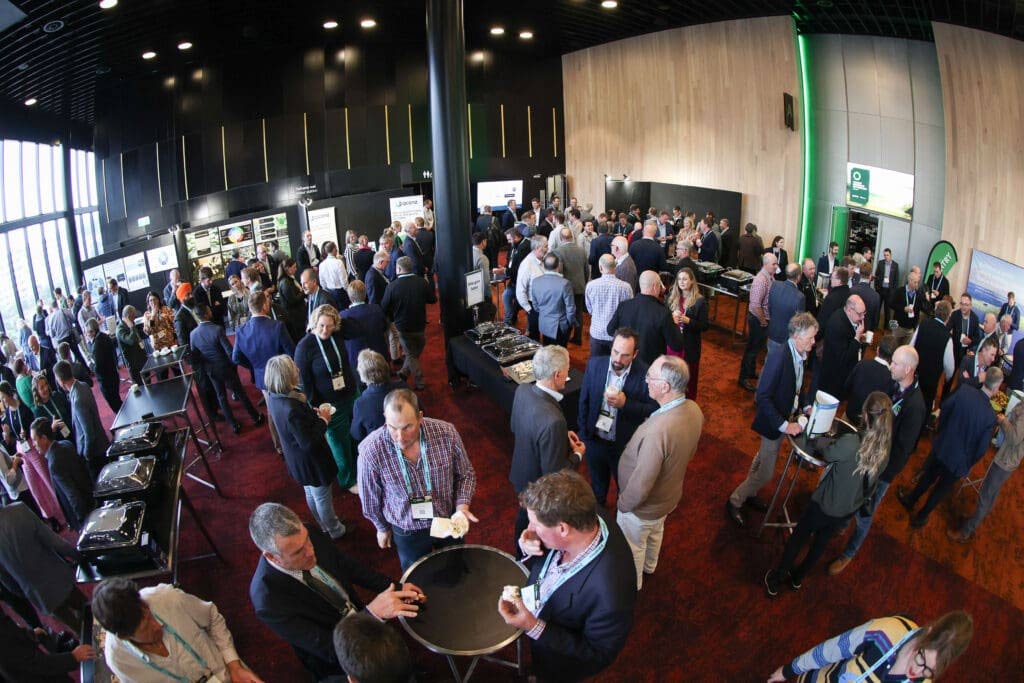
Connect & Network

Join senior decision-makers and influencers from:

Agri-Tech, Telecommunication & Technology | Associations | Farmers and Producers | Primary Industry equipment and services | Corporate Farm holdings | Aquaculture & Fisheries | Forestry | Horticulture | Viticulture | Co-operatives and Producer Boards | Government Utilities | Insurance, Advisors, Chartered Accountants | Iwi | Co-operatives and Producer Boards | Rural Media | Wholesalers, Retails and Exporters | Science & Research | Investors

Thanks to our Diamond Sponsor

8:30

Registration and Coffee

8:50

Mihi Whakatau

9:00

Opening remarks from Summit MC

Rowena Duncum, Client Propositions Manager - Engagement, FMG

9:05

Federated Farmers welcome address

Wayne Langford, President, Federated Farmers of New Zealand

9:15

Minister of Agriculture and Trade address

Hon Todd McClay, Minister of Agriculture, Minister of Forestry, Minister for Trade and Investment and Associate Minister of Foreign Affairs

9:35

Keynote address: Understanding global geopolitical realities – strategies to weather the uncertainty of the current environment

  • Assessing the ongoing impact of the conflict in the Middle East on NZ’s economy and primary industries

  • Mapping the rupture of the global rules-based order and assessing its implications for New Zealand – can we be at the table or are we on the menu?

  • Is it possible to determine any core messages from the volatile geopolitical events of 2025 and 2026 that can inform the New Zealand primary sector’s strategic planning for the future?

  • What has been the impact of 18 months of US tariffs and foreign policy on global markets and trade – how is this effecting New Zealand and how should we respond?

  • How effectively is New Zealand and our primary industries surviving in the current unstable and harsh era of geostrategic competition?

  • Seizing opportunities from disruption – how can New Zealand take advantage of its assets against an ever-changing backdrop of shocks, change and uncertainty

Dr David Skilling, Director, Landfall Strategy Group

10:15

Morning break

10:45

Keynote: Horizon 2050 – gearing up for New Zealand’s food and agriculture future

  • A quarter of the way through the new century – what can we divine about the sector by 2050?

  • What are the global market trends now and coming over the horizon

  • Sustainability and new technology scenarios – how will they play out in New Zealand?

  • Where to in land use and ownership to grow the value of our farming businesses?

  • What kind of people will New Zealand’s food and agri sector require by 2050?

Todd Charteris, Chief Executive, Rabobank New Zealand

11:00

Horizon 2050 panel: Responding to the challenges of the future now

  • Identifying, analysing and responding to the key challenges we will face as we move towards 2050

  • Examining the new farming systems, business models, and tools that will be available to us to respond to future challenges

  • Understanding the markets and consumers that will drive our changing industry

  • What happens and how when biotech hits its straps alongside agri-tech and enviro-tech?

  • Shaping how New Zealand produce will show up in a protein hungry world

  • Understanding the people requirements of our future industry – what do we need from our tertiary sector to ensure we have a workforce with the skills we need

Todd Charteris, Chief Executive, Rabobank New Zealand

Zahra Champion, CEO, Biotech NZ

Wendy Paul, Chief Executive Officer, Growing Future Farmers

Jarred Mair, Chief Insights Officer, Ministry for Primary Industries - Manatū Ahu Matua

Hamish Gow, Sir Graeme Harrison Professorial Chair in Global Value Chains and Trade, Lincoln University

11:45

Panel discussion: Exploring the future of the agricultural cooperative in New Zealand

  • Analysing the changes we have seen in recent years within the ownership of primary sector co-operatives – what do these mean for the future of the co-operative model in New Zealand agriculture?

  • Is the co-op business model broken?

  • Exploring the cumulative benefits of cooperative business models that allows them to remain competitive

  • How do cooperatives overcome the challenges of remaining profitable and raising new capital?

  • How do cooperatives continue to deliver value in the modern era and ensure that the reasons why a co-op was formed remain relevant and in the front of mind for new members and new generations?

  • Is there a better alternative?

Matt Bolger, MD Co-operative Affairs, Fonterra

Bruce Wills, Chairman of Board, Ravensdown

Saya Wahrlich, CEO, Cooperative Business NZ

Anna Nelson, Chair & Farmer Elected Director, Silver Fern Farms

Tanya Houghton, Chief Executive Officer, Farmlands

12:30

Lunch

1:30

Understanding global consumer and retail trends and how can be used to provide insights that can shape the future of New Zealand primary industries

  • Delivering predictive intelligence to map the future trends shaping the global food and drink industry so that you can place the consumer at the centre of your strategy and planning

  • Exploring the mega-trends and changing demographics that are driving global consumers – how can these inform your business and enable you to cater for developing consumer markets

  • Understanding how developing global regulatory environments are driving international agri-business and trade

  • Understanding the message from major global customers of the New Zealand primary industries – what do NZ producers need to know?

  • What does the market tell us about whether end users of New Zealand food and fibre products are willing to pay a premium for credentialled, premium quality of New Zealand produced goods

  • Telling the story of the food, the people that produced it and the land from where it came to consumers

2:00

Analysing the latest developments in trade

  • Analysing the details of New Zealand and India Free Trade Agreement (FTA)

  • Understanding the valuable opportunities that The New Zealand-India FTA will create for New Zealand and Indian exporters to expand two-way trade

  • Examining the contribution that the new FTA will make to the goal of doubling the value of exports

  • Exploring the latest developments within other potential Free trade agreements and Bilateral deal negotiations

Vangelis Vitalis, Deputy Secretary Trade and Economic, Ministry of Foreign Affairs & Trade

2:30

Diplomatic trade and export panel

  • Exploring the latest developments in key global export and trade markets and around international trade relationships

  • What impact is global uncertainty and instability relating to tariffs having on agricultural trade?

  • Examining environmental policies and regulatory settings related to them and the impacts this has on market access and the potential barriers to trade they introduce

  • Analysing the impact of international agricultural subsidies on global food sector productivity and competitivity

  • Linking geopolitics, national security and food security

Muanpuii Saiawi, High Commissioner of India designate, High Commission of India

Sophie Warner-Fog, Consul-General, British High Commission

3:15

Afternoon break

3:35

Silver Fern Farms vision for the future of red meat

  • Exploring our journey to nurture positive change and improve tomorrow for the next generation

  • Setting the world standard in red meat with innovation and sustainability from pasture to plate

  • Delivering responsibly raised, climate-conscious red meat from New Zealand's pastures directly to tables of premium global consumers

Dan Boulton, Chief Executive, Silver Fern Farms

4:05

Exploring the changing demographics of rural New Zealand

  • Analysing the population trends that we are seeing in rural areas and regions

  • Is regional New Zealand emptying out?

  • How is this likely to limit rural employers looking to fill vacancies – both now and into the future

  • What does this mean for the rural economy, the future economic viability of rural New Zealand and the primary industries that sustains it?

  • How can we attract urban people to New Zealand’s regions – are there lessons we can learn from overseas?

  • Do we have to rely on attracting and retaining immigrants?

  • How should this understanding inform the development of policy and drive investment in services and infrastructure for regional New Zealand – why would people choose to live and work in an area with no access to services?

Distinguished Professor Emeritus Paul Spoonley, Senior Fellow, Koi Tū: Centre for Informed Futures & Honorary Research Associate, Massey University

4:35

Sharing New Zealand First’s vision to grow the rural economy and the regional communities that rely on it

  • Maximising the value of rural New Zealand to the growth of the New Zealand economy

  • Investing in rural and regional communities to drive the engine of growth

Hon Shane Jones, Minister for Oceans and Fisheries, Minister for Regional Development, Minister for Resources, Associate Minister of Finance, and Associate Minister for Energy & Deputy Leader, New Zealand First

5:00

Summary remarks from the Summit MC followed by Networking Recption and Primary Industries New Zealand Awards Dinner and Ceremony

9:00

Welcome back from Summit MC

Rowena Duncum

9:05

Prime Minister’s address: Sharing the Government’s vision for the future of the primary industries

  • Driving New Zealand’s economy through record food and fibre exports

  • Boosting productive and sustainable growth by enabling more flexible land

Rt Hon Christopher Luxon, Prime Minister of New Zealand.

9:35

MPI address: Supporting the primary industries to act now and secure a valuable position within a changing global food system

  • Sharing how MPI is preparing the sector to plan for the future of food

  • Providing information around the macroeconomic trends and the demand and supply side shifts that will impact global food markets

  • Identifying the high impact opportunities rising global food demand will present for New Zealand producers

  • Exploring mechanisms to boost production to meet rising global demand whilst delivering environmental credentials

10:05

Exploring the state of NZ agricultural science and innovation

  • Is the merger of New Zealand major Agri-science institutions delivering for agriculture?

  • Building effective public /private mission focused science partnerships

Mark Piper, Transition CEO, The Bioeconomy Science Institute

10:30

Morning break

11:00

Panel discussion: Modernising the primary industries with cutting edge science, technology and innovation

  • Leveraging New Zealand’s science, technology, research and innovation capability and investing in the future products and systems that will support farming to improve on farm productivity, grow value and safeguard environmental outcomes

  • How can we build for the future by accelerating the primary industries transition to a data-driven, AI enabled enterprise that is agile and resilient enough to support continued growth

  • Exploring the role of innovation in shaping a more sustainable and productive future for our sector - enhancing value for producers and fostering a more resilient industry

  • Science and technology adoption – with the massive number opportunities, how can we ensure they are adopted so that we are able to leverage the new science, technologies, tools and innovations that will drive future productivity and growth?

Dr Jaqueline Rowarth, Adjunct Professor, Lincoln University

Jonno Hill, Managing Director, Hill Labs

DairyNZ (representative TBC)

11:45

Deploying Artificial Intelligence in agriculture

  • Analysing how AI is transforming the agricultural sector and driving innovation, productivity and sustainability on farms across New Zealand

  • Identifying the key AI technologies and innovations that will drive agriculture forward over the next 10 years

  • How to overcome barriers and key challenges potentially limiting larger scale adoption of AI within the primary sector – ethics, data transparency and ownership, connectivity

  • Exploring how the primary industries can deploy AI strategically and leverage its capabilities to enable the shift from volume to value and ensure our sustainable future

Paul Windemuller, CEO, PIP, Podcaster & Nuffield Scholar

12.05

What does the new Fonterra mean for the sector?

  • Understanding what the co-operatives decision to sell its global consumer and associated businesses means for the business and for NZ farming

  • Exploring the strategic vision for the exciting new phase for Fonterra that the divestment will usher in

  • Outlining the value that the simplified and more focused business will deliver

12:35

Sharing the Labour Party’s vision for the future of New Zealand farming

Rt Hon Chris Hipkins, Leader, New Zealand Labour Party

1:00

Lunch

2:00

Outlining the ACT parties’ positions and policies on the issues that matter to farmers, agriculture and rural New Zealand

Hon David Seymour. Deputy Prime Minister and Leader, ACT Party

2:20

Zespri – how we are driving the future of NZ horticulture

  • Outlining our future 2035 strategy - looking ahead at how we continue to deliver value over the next 10 years in a an increasingly competitive and complex global environment

  • Setting ourselves a bold and exciting ambition to become the world’s healthiest fruit brand at the forefront of the global fruit category by championing health and nutrition for our consumers

  • Unleashing brand-demand and building a globally iconic fruit brand

  • Creating the product portfolio of the future – How we are evolving to stay ahead of shifting consumer expectations, increasing competition, climate pressures, geopolitical uncertainty and accelerating technological change

  • Transforming global supply by establishing a responsive, resilient and reliable year-round supply chain

2:40

Panel discussion: Dairy and beef integration – exploring the integrated future of farming

  • How can we effectively combine the two types of farming to increase efficiency, profitability and welfare

  • Dairy beef - Leveraging our increased understanding and expertise in genetics to develop a new stock class with traits that will work for dairy cows and have the best meat animal attributes

  • What are the challenges to putting systems into place to make a large-scale change in farming across New Zealand?

Will Burrett, Chief Operating Officer, Landcorp | Pāmu

Jen Corkran, Senior Animal Protein Analyst, RaboResearch Food & Agribusiness, Rabobank

DairyNZ (representative TBC)

David Chin, Chief Executive, LIC

3:20

Closing keynote: A world without cows

  • Improving our scientific understanding of the role that cattle play in ecosystems and food systems

  • Analysing the crucial role that cows play in global food security

  • How is this likely to limit rural employers looking to fill vacancies – both now and into the future

  • Can we flip the narrative around the climate impact of cattle through a deeper understanding of the grazing -cattle carbon cycle?

5:00

Closing remarks from the Summit MC

Speakers

Jonno Hill

Managing Director
Hill Labs
Dr Jonno Hill joined Hill Labs immediately after finishing his studies at the University of Canterbury in 2005, where he studied Molecular Biology and Chemistry, and graduated with a PhD in Organic Synthetic Chemistry. He spent his first four years at Hill Labs in the Analytical Technology groups of the Environmental, and Food and Bioanalytical divisions. Here, he primarily developed methods on the company’s high-tech pesticide residue testing instruments. The following two years, Jonno spent time in an Operational Management role in the company’s Food and Bioanalytical division. In December 2011, he moved into the Senior Management position of Division Manager – Environmental. After a restructure in 2015, Jonno stepped into the role of General Manager – Technology, overseeing the companies implementation and use of lab and information technology. In May 2018, he took over the Chief Executive Officer role from the departing Dr Matt Glenn.

Rt Hon Christopher Luxon

Prime Minister of New Zealand
Christopher Luxon is the 42nd Prime Minister of New Zealand. He is also the Minister for National Security and Intelligence and the Minister Responsible for Ministerial Services. He entered Parliament at the 2020 election as the MP for Botany and was elected Leader of the National Party in November 2021. Prior to entering Parliament, Christopher was Chief Executive Officer of Air New Zealand from 2013 to 2019. Prior to joining Air New Zealand, Christopher spent 18 years working at multinational consumer products company Unilever, in New Zealand, Australia, the UK, USA and Canada. Christopher has a Master of Commerce in Business Administration from the University of Canterbury. He is married to Amanda and they have two adult children.

Jarred Mair

Chief Insights Officer
Ministry for Primary Industries - Manatū Ahu Matua
Jarred Mair is the Chief Insight Officer at MPI. He leads a dedicated team at MPI who are tasked to provide long-term insights and targeted inquiries to help the sector stay on the pulse. He leads strategic initiatives that address the global challenges and opportunities faced by New Zealand’s food and fibre sectors, particularly in areas such as geopolitical shifts, consumer trends, and emerging technologies. His leadership has been instrumental in driving discussions around high-value, sustainable products that position New Zealand as a global leader in agriculture and environmental stewardship. With over 20 years of experience in both the public and private sectors, Jarred has led research on critical topics such as strategic sector framing, alternative proteins, and genetic technologies

Sophie Warner-Fog

Consul-General - British Consulate-General Auckland
British High Commission

Ms. Muanpuii Saiawi

High Commissioner of India to New Zealand
High Commission of India
Ms. Muanpuii Saiawi is an Indian Foreign Service officer of 2005 batch. 2. She has served in Embassy of India in Republic of Korea, Japan and in Israel. In the Ministry of External Affairs she has served as Under Secretary, Deputy Secretary and Director (Disarmament & International Security Affairs). She was Joint Secretary (Cyber Diplomacy & New Emerging & Strategic Technologies) from 2022-2023. She was the Chair of the 2022 Group of Governmental Experts on the United Nations Register of Conventional Arms. 3. Ms. Saiawi served as Joint Secretary (Disarmament & International Security Affairs) from September 2022 to March 2026. The Division handles a wide range of multilateral disarmament issues; the multilateral export control regimes; maritime security and international cooperation with Department of Space and Department of Atomic Energy. 4. She is High Commissioner of India to New Zealand. 5. Her husband is Ambassador of India to the Socialist Republic of Viet Nam. They have a daughter.

Hamish Gow

Sir Graeme Harrison Professorial Chair in Global Value Chains and Trade
Lincoln University

amish is the Sir Graeme Harrison Chair in Global Value Chains and Trade at Lincoln University.

He has spent the past 30 years working globally in industry, government, and academia riding the waves of market liberalisation around the world.

He passionately applies design-led innovation to assist farmers and regional SMEs build innovative customer-focused business models and value chains that can successful launch agricultural, food, and technology products and services into local, regional and international markets.

He founded the International Business Immersion Program at University of Illinois, Food Safety Knowledge Network at Michigan State University, and Global Markets Program at Global Food Safety Initiative.

He was seconded to the Meat and Livestock Australia Donor Company as their business design in residence where he led the Australia Young Food Innovators program.

He also supported the Producer Innovation Fast Track program at the World Bank where he led the establishment of the Global Food Safety Partnership.

Hamish holds a BCom (Ag) from Lincoln University, New Zealand, and a MS in Agricultural Finance and Ph.D. in Marketing and Food Distribution from Cornell University, USA.

Previously, he was on the faculty and staff positions at Massey University, the University of Illinois, Michigan State University and Cornell University in the USA, KU Leuven in Belgium, Slovakian Agricultural University in Nitra, Slovakia, and Managing Director of Partnerships for Food Industry Development – Fruits and Vegetables at USAID.

He is currently supporting the Supply Chain Integrity Program for the Ministry of Primary Industries.

Dr Jaqueline Rowarth

Adjunct Professor
Lincoln University
Jacqueline Rowarth has a Bachelors degree in Agricultural Science with honours in Environmental Agriculture, and a PhD in Soil Science from Massey University. She has worked in research, education, management and governance with Agresearch, Lincoln University, Unitec in Auckland, The University of Melbourne, Massey University, University of Waikato, the Environmental Protection Authority, Crop and Food Research, AGMARDT and DairyNZ. She is a Past President of the New Zealand Institute of Agricultural and Horticultural Science, and of the New Zealand Grassland Association. She is a frequent contributor to public debate in the media and speaks to industry, society and school groups whenever invited. In 2008 she was awarded Companion of the New Zealand Order of Merit for services to Agricultural Science, in 2009 she was given the inaugural award of Agricultural Personality of the Year by Federated Farmers and in 2010 she was selected as the Agricultural Communicator of the Year by the Guild of Agricultural Communicators and Journalists. Jacqueline remains committed to trying to help society understand the importance of agriculture and horticulture, and dispelling the myths that surround food production.

Paul Windemuller

CEO, PIP
& Nuffield Scholar
Paul Windemuller is a first-generation dairy farmer and a recognized authority on the integration of artificial intelligence in agriculture. As a 2024 Nuffield International Farming Scholar and the 2025 National Milk Producers Federation Farmer Communicator of the Year, Paul has traveled to more than fifteen countries—including New Zealand, Ireland, the United Kingdom, Denmark, Sweden, Canada, Australia, Brazil, the Netherlands, and the UAE—exploring how emerging technologies are transforming animal agriculture, farm economics, and global food systems. From his own robotic dairy operation in Michigan to conversations with AI researchers, agritech founders, and policymakers worldwide, Paul bridges the practical and the visionary—connecting the cow barn to the boardroom, and technology to stewardship. His work focuses on understanding how innovation in farming, data, and emerging technologies can strengthen farms while preserving producer autonomy.

Hon Shane Jones

Minister for Oceans and Fisheries, Minister for Regional Development, Minister for Resources, Associate Minister of Finance, and Associate Minister for Energy & Deputy Leader
Shane Jones is the Minister for Oceans and Fisheries, Minister for Regional Development, Minister for Resources, Associate Minister of Finance, and Associate Minister for Energy. Mr Jones entered Parliament in 2005 with the Labour Party and joined New Zealand First as an MP in 2017. Mr Jones was educated at St Stephen’s and has completed degrees at universities in Wellington, Western Australia, and Harvard. He has held business and public sector leadership roles such as Chairman of Sealord, our country’s first Pacific Economic Ambassador, Member of Parliament, and a Minister in government.

Rt Hon Chris Hipkins

Leader
New Zealand Labour Party
Chris Hipkins is the Leader of the New Zealand Labour Party and Member of Parliament for Remutaka. Chris’ vision of New Zealand is a country where Kiwis can create a better life for themselves and their families through hard work. His belief that every New Zealander should have the opportunities they need to succeed is why he got into politics – and it’s what drives him every day. Chris became the Leader of the Labour Party and Prime Minister in January 2023. Amid a global cost of living crisis and economic uncertainty around the world, he immediately reset the Government to focus on the bread and butter issues that matter most to New Zealanders. He has put supporting families front and centre, while growing a strong economy that works for all New Zealanders. Through Budget 2023, the Chris Hipkins led Government introduced a range of practical and targeted cost of living measures to support New Zealand families. This included scrapping the $5 co-payment on prescriptions, free or cheaper public transport for young people, and cheaper childcare. At the same time, Chris ensured that his first Budget did more than just respond to the challenges of today, it also built for the future. It made targeted investments in areas he believes are critical to growing our economy and improving productivity, including skills, science and technology and infrastructure. Prior to becoming Prime Minister, Chris held a range of Ministerial portfolios. Following the 2017 election, he became the Minister of Education, Minister for the Public Service and Leader of the House. During this time, he oversaw a number of significant achievements, such as introducing free and healthy lunches in schools, and free apprenticeships and trades training which led to record apprenticeship numbers. On top of this, more schools and classrooms were built across the country, and almost every state school was upgraded through the School Investment Package. Chris later took on the ministerial portfolios for Health, COVID-19 and Police, where he delivered a range of measures to make New Zealand safer and fairer for everyone. Growing up, Chris was strongly influenced by his parents, his education and the caring Hutt Valley community. This upbringing sparked his passion in public service and grounded him in the reality of working families with big aspirations.

David Chin

Chief Executive
LIC

David joined LIC in 2006 and has held several leadership roles over that time including GM Operations and Service and Chief Transformation Officer. David is a passionate advocate for herd improvement and the New Zealand dairy industry.  Before arriving at LIC, David was Brand and Communications Manager at Kiwibank and Deputy Director/Business Manager at City Gallery Wellington. He’s also worked in various marketing and consulting roles at New Zeala Post.

Tanya Houghton

Chief Executive Officer
Farmlands
Tanya has been leading the Farmlands/Te Whenua Tāroa whānau as Chief Executive Officer since September 2021. Through her career Tanya has developed extensive experience delivering organisational regeneration and strong financial outcomes focussed on shareholder objectives. Prior to joining the co-operative, Tanya has held a variety of roles including 15 years with Greencross Group, Australasia’s largest integrated pet care and veterinary company, with responsibilities across both Australia and New Zealand. Tanya also has governance experience including as a director of Animates NZ Holdings Ltd and the Petbarn Foundation. Tanya is passionate about the unique role Farmlands/Te Whenua Tāroa has in supporting New Zealand agriculture and delivering to our purpose: “To enable improved profitability and productivity for NZ farmers and growers.” Tanya is guided by the concept of kaitiakitanga (inter-generational guardianship) in building strategy and in her approach to measuring success. Tanya believes that, as CEO, she is responsible for the protection and care of Farmlands/Te Whenua Tāroa, to ensure the co-operative is healthy and self-sustaining for the future of New Zealand’s food and fibre sector.

2026 Awards: Enter or nominate by 1 April

The Primary Industries New Zealand Awards are open to individuals, teams and companies from any producer groups working within the primary sector or in support of the primary sector.
The Awards Ceremony provides a fantastic opportunity to celebrate and recognise innovation, excellence, collaboration and success across the primary industries.

Nominations Open

29 January 2026

Nominations Close

1 April 2026

Judges Collaborate

6 May 2026

Finalists Announced

12 May 2026

Winners Announced

23 June 2026

Awards Categories

Federated Farmers and Brightstar are pleased to announce 3 new award categories for 2026

Agricultural Communicator of the Year Award 

This award recognises an outstanding communicator in New Zealand’s primary sector. The entrant is to have made a significant and sustained contribution by effectively conveying key issues, events and information that matter to rural audiences and the wider community. The recipient will have demonstrated excellence in communication, clarity, and real impact through media, events, digital platforms, and/or public engagement – helping to inform, connect and strengthen New Zealand’s agricultural sector. This category is open to individuals, groups or organisations.

Membership of the New Zealand Guild of Agricultural Journalists & Communicators is encouraged.

Nominations must address the following:

  • Why was this individual/group/organisation nominated?
  • How have they demonstrated excellence in effective communication?
  • How widely known are they within New Zealand agriculture?
  • What has been the impact of their communication?
  • How have they demonstrated a commitment to the agricultural industry?

2026 Winner: XXX 

2026 Sponsor:

Rural Woman of the Year Award 

This inaugural award recognises an exceptional woman who has made a significant contribution to agriculture, agribusiness or New Zealand’s rural communities. The recipient will have demonstrated clear and sustained excellence in leadership, advocacy or grassroots community involvement, and has made a meaningful impact. Nominees will have clear evidence of how this woman has helped lead, inspire, connect, or strengthen New Zealand’s rural communities and the wider agricultural sector.

This category is only open to individual women based in New Zealand. 

Nominations must address the following:

  • Why was this woman nominated?
  • What is her connection to New Zealand’s rural communities?
  • How has she demonstrated excellence in leadership, advocacy, or grassroots community involvement?
  • What has been the tangible impact of her work for rural New Zealand?
  • How has she demonstrated a commitment to supporting or empowering rural communities or the wider agricultural industry?

2026 Winner: XXX 

2026 Sponsor:

The Excellence in Agricultural Journalism Rongo Award 

This prestigious award recognises excellence in agricultural journalism demonstrated by a New Zealand-based journalist, media team or outlet in the previous 12 months. The recipient will have produced outstanding journalistic work demonstrating exceptional storytelling, depth of research and real impact through insightful agricultural reporting. This category celebrates the ability to inform, engage and educate both rural and wider audiences – strengthening public understanding of and connection to New Zealand agriculture. 
Submissions must include at least two feature stories on separate subjects, or a single-theme series, published or broadcast within the last 12 months.

Nominations must address the following:

  • Why has this journalist, media team or outlet been nominated?
  • How have they contributed to the advancement and understanding of agriculture?
  • What specific work have they produced in the last 12 months that deserves recognition?
  • How have they gone above and beyond with their research, accuracy or storytelling?
  • How have they brought a fresh perspective or originality in their coverage of an issue?

2026 Winner: XXX 

2026 Sponsor:

Emerging Leader Award 

This award recognises an emerging leader who is new (started in the industry within the last 2 – 5 years) to the New Zealand primary sector. The recipient must be an individual who demonstrates commitment, passion and leadership in their chosen career within the primary industries. Nominations should demonstrate leadership the individual has shown and their impact on the industry. Those nominated should also demonstrate their commitment to the primary industries and how they have made and can make, develop and progress the sector.

Nominations must address the following:

  • Why is this person nominated for the award?
  • Show proven evidence of their commitment and passion for their organisation and the wider sector
  • What is it about this person’s commitment to business and their community that proves they deserve this award?
  • Explain the leadership qualities this individual has displayed and the impact this has on the primary sector

2025 Winner: Bridie Virbickas, Federated Farmers Bay of Plenty Sharemilker Chair 

2026 Sponsor:

Champion Award 

This award recognises a New Zealand-based individual’s unwavering commitment to the rural sector on a specific area or cause. This will be someone who has spearheaded a project, initiative and/or event which has had a significant and positive impact on the Primary Sector. This person is known to overcome challenges and attain a high level of success in educating others about the importance of rural New Zealand.

Nominations must address the following:

Why have you nominated this person?

  • What initiative/s did this individual “champion” “front foot” and what were the positive impacts and benefits on the primary sector and rural communities?
  • What challenges did this individual face and how did educating others play a part in the ability to succeed?
  • What specifically makes their contribution to the Primary industries significant

2025 Winner: Dr Robyn Dynes, Principal Scientist and Farmer Engagement Specialist, AgResearch 

Team & Collaboration Award 

This award recognises a team of New Zealand-based agricultural professionals who have actively participated in collaborative problem solving and worked together to overcome obstacles. The team have collaborated and advocated for New Zealand’s primary industries and achieved successful outcomes on an issue or problem facing the wider agricultural community. The team can consist of people from multiple organisations and must have a minimum of three people.

Nominations must address the following:

  • Why was this team/collaboration nominated?
  • What was the issue/problem/obstacles facing the agricultural community?
  • How did the team come together to collaborate and set out to resolve the issue?
  • Show evidence of how the team has collaborated to achieve the desired outcome and what was measure of success.

2025 Winner: Fonterra, Ballance, Ravensdown, and LIC for the open data sharing ecosystem 

Technology & Collaboration Project Award 

This Award aims to recognise and celebrate professionals working on primary sector projects that focus on supporting rural communities – including producers, scientists, investors, industry bodies, external providers and sector leaders. This award recognises people who have worked on an technology project /projects designed to make New Zealand agriculture more efficient and effective.

Nominations must address the following:

  • Why was this project nominated?
  • Explain the detail of the project and its potential positive impact on New Zealand Primary Industries
  • Explain how this technology will support New Zealand
  • Agriculture to be more effective and efficient, whilst adding value
  • Show evidence of how this technological innovation has been instrumental in satisfying the rural/farming sector.

2025 Winner: FAR for combine workshops

2026 Sponsor:

Food, Beverage and Fibre Product Award 

2025 Winner: Chia Sisters

The award recognises and celebrates a standout product in the New Zealand Primary sector. The food, beverage or fibre product can be an individual, team or company which has shown success and or considerable growth in either product sales or consumer engagement within the last 12 months to 18 months. The applicant/s must demonstrate a sustainable approach to their production processes show evidence of working closely with those in and across the primary sector.

Nominations must address the following:

  • Why have you nominated this product?
  • Provide evidence of considerable growth in either product sales or consumer engagement within the last 12 to 18 months
  • How is the business model sustainable and how does this benefit the production of their product?
  • What are the reputable business practices and how does the brand story and product contribute to New Zealand’s marketing image?

2026 Sponsor:

Guardianship & Conservation Award (Kaitiakitanga Award) 

This award recognises an exceptional primary industry conservation project/initiative. The winner will be emblematic of the true spirit of guardianship over natural resources and native ecosystems for the ongoing and continued benefit of future generations, while demonstrating leadership and commitment to the primary industries.

Nominations must address the following:

  • Why has this person/people been nominated?
  • What is the conservation project/body of work that is emblematic of and supports natural resources, native ecosystems? Does this influence climate change mitigation?
  • How was leadership and commitment to the primary industries demonstrated?
  • How will this project/body of work benefit future generations?

2025 Winner: Pacificvet and co-founder Kent Deitemeyer

2026 Sponsor:

Outstanding Contribution to New Zealand’s Primary Industries Award 

The award enables the primary industries community to recognise and appreciate the efforts of one of its own. This award will go to a long-standing hero who has continuously supported both their rural community and their given rural industry with commitment and dedicated service. The winner of this award consistently supports their local community and goes above and beyond for others in times of extreme and challenging times.

There are no finalists for this award. The recipient will be selected by the 2026 judging panel.

2025 Winner: Eric Roy, Southland Farmer and NZ Pork Chair 

2026 Sponsor:

Awards Judges 2026

Corrigan Sowman

Corrigan is a 3rd generation dairy farmer and Chairman of the breeding cooperative LIC. He farms in partnership with his wider family in Golden Bay on a 450ha dairy farm. He is a past Kellogg and Nuffield Scholar, former member of Fonterra’s Sustainability Advisory Panel, past Deputy Chair of DairyNZ Environment Leaders program and past Chair of the SIDE and SIDDC. His earlier career as a consulting officer and farm consultant has led to a life long interest in working to develop New Zealand’s dairy sector and he appreciates the opportunity to contribute to the success of the Primary Industry Awards in 2025.

Alan Emerson

Alan Emerson started his agricultural journalism career in 1973 working for television and national and commercial radio presenting rural programmes. In 2003 he purchased a farm in coastal Wairarapa. He served on the provincial executive of Federated Farmers for three years until writing commitments presented a potential conflict of interest. Since 2004 he has been a columnist for Farmers Weekly, (since its inception), never missing an edition over that time. He has edited and co-written three books on agriculture. In 2024 he was awarded the Ravensdown Agricultural Communicator of the Year.

Justin Courtney

Chair
Metris
Justin Courtney is the Chair of weather data provider Metris. Metris provides weather insights to the horticulture, viticulture and construction sectors, and has recently received international awards for its forecast services and its innovative in-orchard technology. Justin is also the founder of Dawn Chorus Consulting which provides advice to companies in the food and fibre sector. Justin’s 25-year career in agribusiness started with the Victorian Farmers Federation and has spanned work in the UK, EU and Middle Eastern markets. On returning to New Zealand he worked in the dairy industry before leading Silver Fern Farms communications and sustainability efforts for close to a decade.

Kazi Takaska

General Manager
Onions New Zealand
Kazi Talaska is the General Manager of Onions New Zealand, working to support the growth and success of New Zealand’s onion and wider vegetable industries. Originally from Indonesia, Kazi has built her career in horticulture industry support and today works closely with growers, exporters, and government agencies to strengthen market access, grower research, and enhance the competitiveness of New Zealand’s onion exports. She also manages several pan-sector vegetable initiatives, including Te Ahikawariki – The Vegetable Industry Centre of Excellence (VICE), which is a proof-of-concept research farm for vegetable growers. Beyond her industry role, Kazi serves as Chair of the Food and Fibre Youth Network, supporting the next generation of leaders across the food and fibre sectors.

Steve Wilkins

Steve Wilkins is a farmer based in Athol, Northern Southland. He manages a mixed cropping and livestock family farming business, growing a variety of  arable crops including wheat, barley, peas, beans, and grass seed. Additionally, the business is involved in finishing lambs, breeding cattle and deer, and providing dairy support. Steve holds several leadership roles in the agricultural sector. He is the Vice Chair for the Foundation for Arable Research (FAR) and the Chair for the Otago/Southland Arable Research Group. He is also a Director of United Wheat Growers and a Trustee for theNew Zealand Rural Leadership Trust. As a Nuffield Scholar, Steve gained valuable insights into global food production systems through extensive international travel and developed a vast network across the globe. Steve attended the Advanced Agricultural Business Management Program at    the Royal Agricultural University in Cirencester England and is a member of The Worshipful Company of Farmers. Steve is passionate about developing leadership within agriculture to address future challenges in the primary industries.

Richard Mcintyre

Richard and his wife Emma are herd-owning sharemilkers in the Horowhenua where they milk 830 cows across two farms, rear 700 calves, and lease a 180ha dry stock farm as they work their way towards farm ownership. They have two teenage children, Olivia and Matthew. Richard is a farmer elected director of DairyNZ and is a former Federated Farmers Dairy Chair and Board Member.

Karen Williams

Chief Executive
Irrigation New Zealand
Karen Williams is the Chief Executive of Irrigation New Zealand, a role she commenced in February 2025. She leads a committed and high-performing team focused on ensuring New Zealand’s food and fibre sectors have reliable, long-term access to water. Her work spans advocating for new water storage solutions, supporting the sustainability of existing water users, and helping shape national conversations on freshwater management. Guided by Irrigation New Zealand’s vision of “water to nourish our community, environment and economy,” Karen champions the productive and sustainable use of water – balancing economic growth with positive outcomes for both communities and the environment. Karen also serves as a Trustee of the New Zealand Farm Environment Trust, which oversees the nationwide Ballance Farm Environment Awards and promotes and celebrates excellence in environmental stewardship and enhancement on New Zealand farms and orchards. Before joining IrrigationNZ, Karen held senior roles across the rural sector, including National Rural Propositions Manager at FMG and National Vice President and Arable Industry Chairperson at Federated Farmers New Zealand. Karen and her husband Mick farm a 520-hectare irrigated property in the Wairarapa, specialising in mixed cropping and beef and lamb finishing. Their operation has been recognised for environmental leadership, winning the Wellington Regional Supreme Award in the 2013 Ballance Farm Environment Awards and receiving the Environmental and Sustainability Award at the 2022 New Zealand Arable Awards. Karen is a graduate and passionate advocate of the Agri-Women’s Development Trust Escalator Programme and was named Biosecurity Farmer of the Year in 2019 for her leadership during the pea weevil biosecurity incursion.

Robyn Dynes

Principal Scientist and Farmer Engagement Specialist
AgResearch
Dr Robyn Dynes (FNZIAHS) is a farming systems scientist with AgResearch based at Lincoln.  Her science in farming systems includes emissions to air and water and the current and future challenges facing our farming systems.  She has governance roles across arable, S+B and dairy sectors. Robyn spent her early years in Southland on a sheep and beef farm, followed by a Canterbury mixed cropping farm, she started her science career with CSIRO in Western Australia before returning to AgResearch.  Her passion is working with farmers to bring science to the questions that matter to farmers.

Dean Williamson

CEO and Publisher
AgriHQ
Dean and Cushla Williamson own AgriHQ, the Feilding-based home of their flagship national newspaper, Farmers Weekly. There are about 65 on the AgriHQ team, half of them full time and the rest freelance and part time. Every day they produce agribusiness news, insights and analysis through print, digital, podcasts, video, emailed newsletters and market reports. Dean also farms a 45ha sheep, beef and forestry block near Feilding. He began work life as a shearer, became a school teacher, travelled the world for three years, then started his career in rural media in 1992 as the livestock and stud stock manager for The New Zealand Farmer. When not publishing or farming, Dean is likely to be fishing, diving, hunting or sailing, most often with one or more of his and Cushla’s three adult sons.

2026 Sponsors

Diamond Sponsor

Rabobank

Platinum Sponsor

Silver Fern Farms

Gold Sponsors

Dairy NZ

Map of AG

Bioeconomy Science Institute

Silver Sponsor

Landcorp

Awards Sponsors

Rabobank

Kotahi

Asure Quality

Ravensdown

Farmers Weekly

Lincoln University

Ministry Primary Industries

Bioeconomy Science Institute

Exhibitors

Quest

Map of Ag

Premium Booth

QCONZ

Lanyard Sponsor

Rabobank

Supporting Organisations

FAR

Export NZ

Agri Tech New Zealand

MIA

Dairy Womens Network

Animal & Plant Health

NZ Pork

IRPNZ

NZKGI

Horticulture
New Zealand

New Zealand Avocado

NZ Landcare Trust

Vegetables NZ

Summerfruit New Zealand

Potatoes New Zealand

Onions New Zealand

NZ Young Farmers

Rural Women New Zealand

Fertiliser New Zealand

The Food & Fibre Youth Network

Irrigation New Zealand

PRE-SALE TICKETS

Summit Ticket

PRE SALE
$2399
$ 1259 +gst
  • For valid ticket, payment by 31 March, 2026.

Summit & Dinner Ticket

PRE SALE
$2450
$ 1559 Price Per Person +gst
  • For valid tickets, payment by 31 March, 2026.

Dinner Only

Dinner Only Ticket

$ 280 +gst
  • For valid ticket, payment by 23 June, 2026.

Dinner Table 10

$ 2800 +gst
  • For table of 10. Payment by 23 June, 2026.

Summit

Summit Ticket

Super Saver
$2399
$ 1899 +gst
  • For valid ticket, payment by 8 May, 2026.

Summit Ticket

Early Bird
$2399
$ 2099 +gst
  • For valid ticket, payment by 29 May, 2026.

Summit & Dinner Tickets

Super Saver
$2450
$ 2150 price per person +gst
  • For valid tickets, payment by 8 May, 2026.

Group Tickets

Group 2+

$ 1799 price per person +gst
  • Must be from the same organisation and book at the same time. For valid tickets, payment by 23 June, 2026.

Group 2+ Including Dinner

$ 1999 price per person +gst
  • Must be from the same organisation and book at the same time. For valid tickets, payment by 23 June, 2026.

Farmer Producer Rate

Summit Tickets

Early Bird
$999
$ 899 +gst
  • Must be a full-time independent farmer or producer – registrations subject to verification. For valid ticket, payment by 29 May, 2026.

Summit & Dinner Tickets

Early Bird
$1279
$ 1179 price per person +gst
  • Must be a full-time independent farmer or producer – registrations subject to verification. For valid tickets, payment by 29 May, 2026.

Federated Farmers & Brightstar proudly present the Primary Industries New Zealand Summit & Awards

Driving the future of the New Zealand primary industries

The Primary Industries New Zealand Summit and Awards continues to bring together the very best leaders from across the spectrum of New Zealand farming and primary sector business. This year the Summit will focus on understanding and seizing the opportunities of the future, with the event providing high level insights, analysis and debate around the key themes that will decide how effectively we meet the future challenges for the sector.

Key Themes

  • Examine the future of food and the high impact opportunities it will offer to New Zealand
  • Understand changing consumer and market trends to unlock high value future markets for NZ agriculture
  • Discuss how the sector can adapt and develop, deploying new business models and strategies to drive change through to 2025
  • Hear from political leaders in election year sharing their visions for the future of the primary industries
  • Hear the leaders of our major agricultural businesses sharing how their strategies for the future will drive sector growth
  • Explore the future of local government and review its role in supporting the development of changing rural communities and economies
  • Analyse the latest trade developments that will shape future market access
  • Learn how to leverage the new science, technologies, tools and innovations that will drive future productivity and growth

Connect & Network


Join senior decision-makers and influencers from:

Agri-Tech, Telecommunication & Technology | Associations | Farmers and Producers | Primary Industry equipment and services | Corporate Farm holdings | Aquaculture & Fisheries | Forestry | Horticulture | Viticulture | Co-operatives and Producer Boards | Government Utilities | Insurance, Advisors, Chartered Accountants | Iwi | Co-operatives and Producer Boards | Rural Media | Wholesalers, Retails and Exporters | Science & Research | Investors

Thanks to our Diamond Sponsor

8:30

Registration and Coffee

8:50

Mihi Whakatau

9:00

Opening remarks from Summit MC

Rowena Duncum, Client Propositions Manager - Engagement, FMG

9:05

Federated Farmers welcome address

Wayne Langford, President, Federated Farmers of New Zealand

9:15

Minister of Agriculture and Trade address

Hon Todd McClay, Minister of Agriculture, Minister of Forestry, Minister for Trade and Investment and Associate Minister of Foreign Affairs

9:35

Keynote address: Understanding global geopolitical realities – strategies to weather the uncertainty of the current environment

  • Assessing the ongoing impact of the conflict in the Middle East on NZ’s economy and primary industries

  • Mapping the rupture of the global rules-based order and assessing its implications for New Zealand – can we be at the table or are we on the menu?

  • Is it possible to determine any core messages from the volatile geopolitical events of 2025 and 2026 that can inform the New Zealand primary sector’s strategic planning for the future?

  • What has been the impact of 18 months of US tariffs and foreign policy on global markets and trade – how is this effecting New Zealand and how should we respond?

  • How effectively is New Zealand and our primary industries surviving in the current unstable and harsh era of geostrategic competition?

  • Seizing opportunities from disruption – how can New Zealand take advantage of its assets against an ever-changing backdrop of shocks, change and uncertainty

Dr David Skilling, Director, Landfall Strategy Group

10:15

Morning break

10:45

Keynote: Horizon 2050 – gearing up for New Zealand’s food and agriculture future

  • A quarter of the way through the new century – what can we divine about the sector by 2050?

  • What are the global market trends now and coming over the horizon

  • Sustainability and new technology scenarios – how will they play out in New Zealand?

  • Where to in land use and ownership to grow the value of our farming businesses?

  • What kind of people will New Zealand’s food and agri sector require by 2050?

Todd Charteris, Chief Executive, Rabobank New Zealand

11:00

Horizon 2050 panel: Responding to the challenges of the future now

  • Identifying, analysing and responding to the key challenges we will face as we move towards 2050

  • Examining the new farming systems, business models, and tools that will be available to us to respond to future challenges

  • Understanding the markets and consumers that will drive our changing industry

  • What happens and how when biotech hits its straps alongside agri-tech and enviro-tech?

  • Shaping how New Zealand produce will show up in a protein hungry world

  • Understanding the people requirements of our future industry – what do we need from our tertiary sector to ensure we have a workforce with the skills we need

Todd Charteris, Chief Executive, Rabobank New Zealand

Zahra Champion, CEO, Biotech NZ

Wendy Paul, Chief Executive Officer, Growing Future Farmers

Jarred Mair, Chief Insights Officer, Ministry for Primary Industries - Manatū Ahu Matua

Hamish Gow, Sir Graeme Harrison Professorial Chair in Global Value Chains and Trade, Lincoln University

11:45

Panel discussion: Exploring the future of the agricultural cooperative in New Zealand

  • Analysing the changes we have seen in recent years within the ownership of primary sector co-operatives – what do these mean for the future of the co-operative model in New Zealand agriculture?

  • Is the co-op business model broken?

  • Exploring the cumulative benefits of cooperative business models that allows them to remain competitive

  • How do cooperatives overcome the challenges of remaining profitable and raising new capital?

  • How do cooperatives continue to deliver value in the modern era and ensure that the reasons why a co-op was formed remain relevant and in the front of mind for new members and new generations?

  • Is there a better alternative?

Matt Bolger, MD Co-operative Affairs, Fonterra

Bruce Wills, Chairman of Board, Ravensdown

Saya Wahrlich, CEO, Cooperative Business NZ

Anna Nelson, Chair & Farmer Elected Director, Silver Fern Farms

Tanya Houghton, Chief Executive Officer, Farmlands

12:30

Lunch

1:30

Understanding global consumer and retail trends and how can be used to provide insights that can shape the future of New Zealand primary industries

  • Delivering predictive intelligence to map the future trends shaping the global food and drink industry so that you can place the consumer at the centre of your strategy and planning

  • Exploring the mega-trends and changing demographics that are driving global consumers – how can these inform your business and enable you to cater for developing consumer markets

  • Understanding how developing global regulatory environments are driving international agri-business and trade

  • Understanding the message from major global customers of the New Zealand primary industries – what do NZ producers need to know?

  • What does the market tell us about whether end users of New Zealand food and fibre products are willing to pay a premium for credentialled, premium quality of New Zealand produced goods

  • Telling the story of the food, the people that produced it and the land from where it came to consumers

2:00

Analysing the latest developments in trade

  • Analysing the details of New Zealand and India Free Trade Agreement (FTA)

  • Understanding the valuable opportunities that The New Zealand-India FTA will create for New Zealand and Indian exporters to expand two-way trade

  • Examining the contribution that the new FTA will make to the goal of doubling the value of exports

  • Exploring the latest developments within other potential Free trade agreements and Bilateral deal negotiations

Vangelis Vitalis, Deputy Secretary Trade and Economic, Ministry of Foreign Affairs & Trade

2:30

Diplomatic trade and export panel

  • Exploring the latest developments in key global export and trade markets and around international trade relationships

  • What impact is global uncertainty and instability relating to tariffs having on agricultural trade?

  • Examining environmental policies and regulatory settings related to them and the impacts this has on market access and the potential barriers to trade they introduce

  • Analysing the impact of international agricultural subsidies on global food sector productivity and competitivity

  • Linking geopolitics, national security and food security

Muanpuii Saiawi, High Commissioner of India designate, High Commission of India

Sophie Warner-Fog, Consul-General, British High Commission

3:15

Afternoon break

3:35

Silver Fern Farms vision for the future of red meat

  • Exploring our journey to nurture positive change and improve tomorrow for the next generation

  • Setting the world standard in red meat with innovation and sustainability from pasture to plate

  • Delivering responsibly raised, climate-conscious red meat from New Zealand's pastures directly to tables of premium global consumers

Dan Boulton, Chief Executive, Silver Fern Farms

4:05

Exploring the changing demographics of rural New Zealand

  • Analysing the population trends that we are seeing in rural areas and regions

  • Is regional New Zealand emptying out?

  • How is this likely to limit rural employers looking to fill vacancies – both now and into the future

  • What does this mean for the rural economy, the future economic viability of rural New Zealand and the primary industries that sustains it?

  • How can we attract urban people to New Zealand’s regions – are there lessons we can learn from overseas?

  • Do we have to rely on attracting and retaining immigrants?

  • How should this understanding inform the development of policy and drive investment in services and infrastructure for regional New Zealand – why would people choose to live and work in an area with no access to services?

Distinguished Professor Emeritus Paul Spoonley, Senior Fellow, Koi Tū: Centre for Informed Futures & Honorary Research Associate, Massey University

4:35

Sharing New Zealand First’s vision to grow the rural economy and the regional communities that rely on it

  • Maximising the value of rural New Zealand to the growth of the New Zealand economy

  • Investing in rural and regional communities to drive the engine of growth

Hon Shane Jones, Minister for Oceans and Fisheries, Minister for Regional Development, Minister for Resources, Associate Minister of Finance, and Associate Minister for Energy & Deputy Leader, New Zealand First

5:00

Summary remarks from the Summit MC followed by Networking Recption and Primary Industries New Zealand Awards Dinner and Ceremony

9:00

Welcome back from Summit MC

Rowena Duncum

9:05

Prime Minister’s address: Sharing the Government’s vision for the future of the primary industries

  • Driving New Zealand’s economy through record food and fibre exports

  • Boosting productive and sustainable growth by enabling more flexible land

Rt Hon Christopher Luxon, Prime Minister of New Zealand.

9:35

MPI address: Supporting the primary industries to act now and secure a valuable position within a changing global food system

  • Sharing how MPI is preparing the sector to plan for the future of food

  • Providing information around the macroeconomic trends and the demand and supply side shifts that will impact global food markets

  • Identifying the high impact opportunities rising global food demand will present for New Zealand producers

  • Exploring mechanisms to boost production to meet rising global demand whilst delivering environmental credentials

10:05

Exploring the state of NZ agricultural science and innovation

  • Is the merger of New Zealand major Agri-science institutions delivering for agriculture?

  • Building effective public /private mission focused science partnerships

Mark Piper, Transition CEO, The Bioeconomy Science Institute

10:30

Morning break

11:00

Panel discussion: Modernising the primary industries with cutting edge science, technology and innovation

  • Leveraging New Zealand’s science, technology, research and innovation capability and investing in the future products and systems that will support farming to improve on farm productivity, grow value and safeguard environmental outcomes

  • How can we build for the future by accelerating the primary industries transition to a data-driven, AI enabled enterprise that is agile and resilient enough to support continued growth

  • Exploring the role of innovation in shaping a more sustainable and productive future for our sector - enhancing value for producers and fostering a more resilient industry

  • Science and technology adoption – with the massive number opportunities, how can we ensure they are adopted so that we are able to leverage the new science, technologies, tools and innovations that will drive future productivity and growth?

Dr Jaqueline Rowarth, Adjunct Professor, Lincoln University

Jonno Hill, Managing Director, Hill Labs

DairyNZ (representative TBC)

11:45

Deploying Artificial Intelligence in agriculture

  • Analysing how AI is transforming the agricultural sector and driving innovation, productivity and sustainability on farms across New Zealand

  • Identifying the key AI technologies and innovations that will drive agriculture forward over the next 10 years

  • How to overcome barriers and key challenges potentially limiting larger scale adoption of AI within the primary sector – ethics, data transparency and ownership, connectivity

  • Exploring how the primary industries can deploy AI strategically and leverage its capabilities to enable the shift from volume to value and ensure our sustainable future

Paul Windemuller, CEO, PIP, Podcaster & Nuffield Scholar

12.05

What does the new Fonterra mean for the sector?

  • Understanding what the co-operatives decision to sell its global consumer and associated businesses means for the business and for NZ farming

  • Exploring the strategic vision for the exciting new phase for Fonterra that the divestment will usher in

  • Outlining the value that the simplified and more focused business will deliver

12:35

Sharing the Labour Party’s vision for the future of New Zealand farming

Rt Hon Chris Hipkins, Leader, New Zealand Labour Party

1:00

Lunch

2:00

Outlining the ACT parties’ positions and policies on the issues that matter to farmers, agriculture and rural New Zealand

Hon David Seymour. Deputy Prime Minister and Leader, ACT Party

2:20

Zespri – how we are driving the future of NZ horticulture

  • Outlining our future 2035 strategy - looking ahead at how we continue to deliver value over the next 10 years in a an increasingly competitive and complex global environment

  • Setting ourselves a bold and exciting ambition to become the world’s healthiest fruit brand at the forefront of the global fruit category by championing health and nutrition for our consumers

  • Unleashing brand-demand and building a globally iconic fruit brand

  • Creating the product portfolio of the future – How we are evolving to stay ahead of shifting consumer expectations, increasing competition, climate pressures, geopolitical uncertainty and accelerating technological change

  • Transforming global supply by establishing a responsive, resilient and reliable year-round supply chain

2:40

Panel discussion: Dairy and beef integration – exploring the integrated future of farming

  • How can we effectively combine the two types of farming to increase efficiency, profitability and welfare

  • Dairy beef - Leveraging our increased understanding and expertise in genetics to develop a new stock class with traits that will work for dairy cows and have the best meat animal attributes

  • What are the challenges to putting systems into place to make a large-scale change in farming across New Zealand?

Will Burrett, Chief Operating Officer, Landcorp | Pāmu

Jen Corkran, Senior Animal Protein Analyst, RaboResearch Food & Agribusiness, Rabobank

DairyNZ (representative TBC)

David Chin, Chief Executive, LIC

3:20

Closing keynote: A world without cows

  • Improving our scientific understanding of the role that cattle play in ecosystems and food systems

  • Analysing the crucial role that cows play in global food security

  • How is this likely to limit rural employers looking to fill vacancies – both now and into the future

  • Can we flip the narrative around the climate impact of cattle through a deeper understanding of the grazing -cattle carbon cycle?

5:00

Closing remarks from the Summit MC

Speakers

Jonno Hill

Managing Director
Hill Labs
Dr Jonno Hill joined Hill Labs immediately after finishing his studies at the University of Canterbury in 2005, where he studied Molecular Biology and Chemistry, and graduated with a PhD in Organic Synthetic Chemistry. He spent his first four years at Hill Labs in the Analytical Technology groups of the Environmental, and Food and Bioanalytical divisions. Here, he primarily developed methods on the company’s high-tech pesticide residue testing instruments. The following two years, Jonno spent time in an Operational Management role in the company’s Food and Bioanalytical division. In December 2011, he moved into the Senior Management position of Division Manager – Environmental. After a restructure in 2015, Jonno stepped into the role of General Manager – Technology, overseeing the companies implementation and use of lab and information technology. In May 2018, he took over the Chief Executive Officer role from the departing Dr Matt Glenn.

Rt Hon Christopher Luxon

Prime Minister of New Zealand
Christopher Luxon is the 42nd Prime Minister of New Zealand. He is also the Minister for National Security and Intelligence and the Minister Responsible for Ministerial Services. He entered Parliament at the 2020 election as the MP for Botany and was elected Leader of the National Party in November 2021. Prior to entering Parliament, Christopher was Chief Executive Officer of Air New Zealand from 2013 to 2019. Prior to joining Air New Zealand, Christopher spent 18 years working at multinational consumer products company Unilever, in New Zealand, Australia, the UK, USA and Canada. Christopher has a Master of Commerce in Business Administration from the University of Canterbury. He is married to Amanda and they have two adult children.

Jarred Mair

Chief Insights Officer
Ministry for Primary Industries - Manatū Ahu Matua
Jarred Mair is the Chief Insight Officer at MPI. He leads a dedicated team at MPI who are tasked to provide long-term insights and targeted inquiries to help the sector stay on the pulse. He leads strategic initiatives that address the global challenges and opportunities faced by New Zealand’s food and fibre sectors, particularly in areas such as geopolitical shifts, consumer trends, and emerging technologies. His leadership has been instrumental in driving discussions around high-value, sustainable products that position New Zealand as a global leader in agriculture and environmental stewardship. With over 20 years of experience in both the public and private sectors, Jarred has led research on critical topics such as strategic sector framing, alternative proteins, and genetic technologies

Sophie Warner-Fog

Consul-General - British Consulate-General Auckland
British High Commission

Ms. Muanpuii Saiawi

High Commissioner of India to New Zealand
High Commission of India
Ms. Muanpuii Saiawi is an Indian Foreign Service officer of 2005 batch. 2. She has served in Embassy of India in Republic of Korea, Japan and in Israel. In the Ministry of External Affairs she has served as Under Secretary, Deputy Secretary and Director (Disarmament & International Security Affairs). She was Joint Secretary (Cyber Diplomacy & New Emerging & Strategic Technologies) from 2022-2023. She was the Chair of the 2022 Group of Governmental Experts on the United Nations Register of Conventional Arms. 3. Ms. Saiawi served as Joint Secretary (Disarmament & International Security Affairs) from September 2022 to March 2026. The Division handles a wide range of multilateral disarmament issues; the multilateral export control regimes; maritime security and international cooperation with Department of Space and Department of Atomic Energy. 4. She is High Commissioner of India to New Zealand. 5. Her husband is Ambassador of India to the Socialist Republic of Viet Nam. They have a daughter.

Hamish Gow

Sir Graeme Harrison Professorial Chair in Global Value Chains and Trade
Lincoln University

amish is the Sir Graeme Harrison Chair in Global Value Chains and Trade at Lincoln University.

He has spent the past 30 years working globally in industry, government, and academia riding the waves of market liberalisation around the world.

He passionately applies design-led innovation to assist farmers and regional SMEs build innovative customer-focused business models and value chains that can successful launch agricultural, food, and technology products and services into local, regional and international markets.

He founded the International Business Immersion Program at University of Illinois, Food Safety Knowledge Network at Michigan State University, and Global Markets Program at Global Food Safety Initiative.

He was seconded to the Meat and Livestock Australia Donor Company as their business design in residence where he led the Australia Young Food Innovators program.

He also supported the Producer Innovation Fast Track program at the World Bank where he led the establishment of the Global Food Safety Partnership.

Hamish holds a BCom (Ag) from Lincoln University, New Zealand, and a MS in Agricultural Finance and Ph.D. in Marketing and Food Distribution from Cornell University, USA.

Previously, he was on the faculty and staff positions at Massey University, the University of Illinois, Michigan State University and Cornell University in the USA, KU Leuven in Belgium, Slovakian Agricultural University in Nitra, Slovakia, and Managing Director of Partnerships for Food Industry Development – Fruits and Vegetables at USAID.

He is currently supporting the Supply Chain Integrity Program for the Ministry of Primary Industries.

Dr Jaqueline Rowarth

Adjunct Professor
Lincoln University
Jacqueline Rowarth has a Bachelors degree in Agricultural Science with honours in Environmental Agriculture, and a PhD in Soil Science from Massey University. She has worked in research, education, management and governance with Agresearch, Lincoln University, Unitec in Auckland, The University of Melbourne, Massey University, University of Waikato, the Environmental Protection Authority, Crop and Food Research, AGMARDT and DairyNZ. She is a Past President of the New Zealand Institute of Agricultural and Horticultural Science, and of the New Zealand Grassland Association. She is a frequent contributor to public debate in the media and speaks to industry, society and school groups whenever invited. In 2008 she was awarded Companion of the New Zealand Order of Merit for services to Agricultural Science, in 2009 she was given the inaugural award of Agricultural Personality of the Year by Federated Farmers and in 2010 she was selected as the Agricultural Communicator of the Year by the Guild of Agricultural Communicators and Journalists. Jacqueline remains committed to trying to help society understand the importance of agriculture and horticulture, and dispelling the myths that surround food production.

Paul Windemuller

CEO, PIP
& Nuffield Scholar
Paul Windemuller is a first-generation dairy farmer and a recognized authority on the integration of artificial intelligence in agriculture. As a 2024 Nuffield International Farming Scholar and the 2025 National Milk Producers Federation Farmer Communicator of the Year, Paul has traveled to more than fifteen countries—including New Zealand, Ireland, the United Kingdom, Denmark, Sweden, Canada, Australia, Brazil, the Netherlands, and the UAE—exploring how emerging technologies are transforming animal agriculture, farm economics, and global food systems. From his own robotic dairy operation in Michigan to conversations with AI researchers, agritech founders, and policymakers worldwide, Paul bridges the practical and the visionary—connecting the cow barn to the boardroom, and technology to stewardship. His work focuses on understanding how innovation in farming, data, and emerging technologies can strengthen farms while preserving producer autonomy.

Hon Shane Jones

Minister for Oceans and Fisheries, Minister for Regional Development, Minister for Resources, Associate Minister of Finance, and Associate Minister for Energy & Deputy Leader
Shane Jones is the Minister for Oceans and Fisheries, Minister for Regional Development, Minister for Resources, Associate Minister of Finance, and Associate Minister for Energy. Mr Jones entered Parliament in 2005 with the Labour Party and joined New Zealand First as an MP in 2017. Mr Jones was educated at St Stephen’s and has completed degrees at universities in Wellington, Western Australia, and Harvard. He has held business and public sector leadership roles such as Chairman of Sealord, our country’s first Pacific Economic Ambassador, Member of Parliament, and a Minister in government.

Rt Hon Chris Hipkins

Leader
New Zealand Labour Party
Chris Hipkins is the Leader of the New Zealand Labour Party and Member of Parliament for Remutaka. Chris’ vision of New Zealand is a country where Kiwis can create a better life for themselves and their families through hard work. His belief that every New Zealander should have the opportunities they need to succeed is why he got into politics – and it’s what drives him every day. Chris became the Leader of the Labour Party and Prime Minister in January 2023. Amid a global cost of living crisis and economic uncertainty around the world, he immediately reset the Government to focus on the bread and butter issues that matter most to New Zealanders. He has put supporting families front and centre, while growing a strong economy that works for all New Zealanders. Through Budget 2023, the Chris Hipkins led Government introduced a range of practical and targeted cost of living measures to support New Zealand families. This included scrapping the $5 co-payment on prescriptions, free or cheaper public transport for young people, and cheaper childcare. At the same time, Chris ensured that his first Budget did more than just respond to the challenges of today, it also built for the future. It made targeted investments in areas he believes are critical to growing our economy and improving productivity, including skills, science and technology and infrastructure. Prior to becoming Prime Minister, Chris held a range of Ministerial portfolios. Following the 2017 election, he became the Minister of Education, Minister for the Public Service and Leader of the House. During this time, he oversaw a number of significant achievements, such as introducing free and healthy lunches in schools, and free apprenticeships and trades training which led to record apprenticeship numbers. On top of this, more schools and classrooms were built across the country, and almost every state school was upgraded through the School Investment Package. Chris later took on the ministerial portfolios for Health, COVID-19 and Police, where he delivered a range of measures to make New Zealand safer and fairer for everyone. Growing up, Chris was strongly influenced by his parents, his education and the caring Hutt Valley community. This upbringing sparked his passion in public service and grounded him in the reality of working families with big aspirations.

David Chin

Chief Executive
LIC

David joined LIC in 2006 and has held several leadership roles over that time including GM Operations and Service and Chief Transformation Officer. David is a passionate advocate for herd improvement and the New Zealand dairy industry.  Before arriving at LIC, David was Brand and Communications Manager at Kiwibank and Deputy Director/Business Manager at City Gallery Wellington. He’s also worked in various marketing and consulting roles at New Zeala Post.

Tanya Houghton

Chief Executive Officer
Farmlands
Tanya has been leading the Farmlands/Te Whenua Tāroa whānau as Chief Executive Officer since September 2021. Through her career Tanya has developed extensive experience delivering organisational regeneration and strong financial outcomes focussed on shareholder objectives. Prior to joining the co-operative, Tanya has held a variety of roles including 15 years with Greencross Group, Australasia’s largest integrated pet care and veterinary company, with responsibilities across both Australia and New Zealand. Tanya also has governance experience including as a director of Animates NZ Holdings Ltd and the Petbarn Foundation. Tanya is passionate about the unique role Farmlands/Te Whenua Tāroa has in supporting New Zealand agriculture and delivering to our purpose: “To enable improved profitability and productivity for NZ farmers and growers.” Tanya is guided by the concept of kaitiakitanga (inter-generational guardianship) in building strategy and in her approach to measuring success. Tanya believes that, as CEO, she is responsible for the protection and care of Farmlands/Te Whenua Tāroa, to ensure the co-operative is healthy and self-sustaining for the future of New Zealand’s food and fibre sector.

Awards are open. Enter or nominate today!

The Primary Industries New Zealand Awards are open to individuals, teams and companies from any producer groups working within the primary sector or in support of the primary sector.
The Awards Ceremony provides a fantastic opportunity to celebrate and recognise innovation, excellence, collaboration and success across the primary industries.

Nominations Open

29 January 2026

Nominations Close

1 April 2026

Judges Collaborate

6 May 2026

Finalists Announced

12 May 2026

Winners Announced

23 June 2026

Awards Categories

Federated Farmers and Brightstar are pleased to announce 3 new award categories for 2026

Agricultural Communicator of the Year Award 

Details for this award will be published very soon.

This award is   .

Nominations must address the following:

  • Why

2026 Winner: XXX 

2026 Sponsor:

Rural Woman of the Year Award 

Details for this award will be published very soon.

This award is   .

Nominations must address the following:

  • Why

2026 Winner: XXX 

2026 Sponsor:

The Excellence in Agricultural Journalism Rongo Award 

Details for this award will be published very soon.

This award is   .

Nominations must address the following:

  • Why

2026 Winner: XXX 

2026 Sponsor:

Emerging Leader Award 

This award recognises an emerging leader who is new (started in the industry within the last 2 – 5 years) to the New Zealand primary sector. The recipient must be an individual who demonstrates commitment, passion and leadership in their chosen career within the primary industries. Nominations should demonstrate leadership the individual has shown and their impact on the industry. Those nominated should also demonstrate their commitment to the primary industries and how they have made and can make, develop and progress the sector.

Nominations must address the following:

  • Why is this person nominated for the award?
  • Show proven evidence of their commitment and passion for their organisation and the wider sector
  • What is it about this person’s commitment to business and their community that proves they deserve this award?
  • Explain the leadership qualities this individual has displayed and the impact this has on the primary sector

2025 Winner: Bridie Virbickas, Federated Farmers Bay of Plenty Sharemilker Chair 

2026 Sponsor:

Champion Award 

This award recognises a New Zealand-based individual’s unwavering commitment to the rural sector on a specific area or cause. This will be someone who has spearheaded a project, initiative and/or event which has had a significant and positive impact on the Primary Sector. This person is known to overcome challenges and attain a high level of success in educating others about the importance of rural New Zealand.

Nominations must address the following:

Why have you nominated this person?

  • What initiative/s did this individual “champion” “front foot” and what were the positive impacts and benefits on the primary sector and rural communities?
  • What challenges did this individual face and how did educating others play a part in the ability to succeed?
  • What specifically makes their contribution to the Primary industries significant

2025 Winner: Dr Robyn Dynes, Principal Scientist and Farmer Engagement Specialist, AgResearch 

Team & Collaboration Award 

This award recognises a team of New Zealand-based agricultural professionals who have actively participated in collaborative problem solving and worked together to overcome obstacles. The team have collaborated and advocated for New Zealand’s primary industries and achieved successful outcomes on an issue or problem facing the wider agricultural community. The team can consist of people from multiple organisations and must have a minimum of three people.

Nominations must address the following:

  • Why was this team/collaboration nominated?
  • What was the issue/problem/obstacles facing the agricultural community?
  • How did the team come together to collaborate and set out to resolve the issue?
  • Show evidence of how the team has collaborated to achieve the desired outcome and what was measure of success.

2025 Winner: Fonterra, Ballance, Ravensdown, and LIC for the open data sharing ecosystem 

Technology & Collaboration Project Award 

This Award aims to recognise and celebrate professionals working on primary sector projects that focus on supporting rural communities – including producers, scientists, investors, industry bodies, external providers and sector leaders. This award recognises people who have worked on an technology project /projects designed to make New Zealand agriculture more efficient and effective.

Nominations must address the following:

  • Why was this project nominated?
  • Explain the detail of the project and its potential positive impact on New Zealand Primary Industries
  • Explain how this technology will support New Zealand
  • Agriculture to be more effective and efficient, whilst adding value
  • Show evidence of how this technological innovation has been instrumental in satisfying the rural/farming sector.

2025 Winner: FAR for combine workshops

2026 Sponsor:

Food, Beverage and Fibre Product Award 

2025 Winner: Chia Sisters

The award recognises and celebrates a standout product in the New Zealand Primary sector. The food, beverage or fibre product can be an individual, team or company which has shown success and or considerable growth in either product sales or consumer engagement within the last 12 months to 18 months. The applicant/s must demonstrate a sustainable approach to their production processes show evidence of working closely with those in and across the primary sector.

Nominations must address the following:

  • Why have you nominated this product?
  • Provide evidence of considerable growth in either product sales or consumer engagement within the last 12 to 18 months
  • How is the business model sustainable and how does this benefit the production of their product?
  • What are the reputable business practices and how does the brand story and product contribute to New Zealand’s marketing image?

2026 Sponsor:

Guardianship & Conservation Award (Kaitiakitanga Award) 

This award recognises an exceptional primary industry conservation project/initiative. The winner will be emblematic of the true spirit of guardianship over natural resources and native ecosystems for the ongoing and continued benefit of future generations, while demonstrating leadership and commitment to the primary industries.

Nominations must address the following:

  • Why has this person/people been nominated?
  • What is the conservation project/body of work that is emblematic of and supports natural resources, native ecosystems? Does this influence climate change mitigation?
  • How was leadership and commitment to the primary industries demonstrated?
  • How will this project/body of work benefit future generations?

2025 Winner: Pacificvet and co-founder Kent Deitemeyer

2026 Sponsor:

Outstanding Contribution to New Zealand’s Primary Industries Award 

The award enables the primary industries community to recognise and appreciate the efforts of one of its own. This award will go to a long-standing hero who has continuously supported both their rural community and their given rural industry with commitment and dedicated service. The winner of this award consistently supports their local community and goes above and beyond for others in times of extreme and challenging times.

There are no finalists for this award. The recipient will be selected by the 2026 judging panel.

2025 Winner: Eric Roy, Southland Farmer and NZ Pork Chair 

2026 Sponsor:

Awards Judges 2026

Corrigan Sowman

Corrigan is a 3rd generation dairy farmer and Chairman of the breeding cooperative LIC. He farms in partnership with his wider family in Golden Bay on a 450ha dairy farm. He is a past Kellogg and Nuffield Scholar, former member of Fonterra’s Sustainability Advisory Panel, past Deputy Chair of DairyNZ Environment Leaders program and past Chair of the SIDE and SIDDC. His earlier career as a consulting officer and farm consultant has led to a life long interest in working to develop New Zealand’s dairy sector and he appreciates the opportunity to contribute to the success of the Primary Industry Awards in 2025.

Alan Emerson

Alan Emerson started his agricultural journalism career in 1973 working for television and national and commercial radio presenting rural programmes. In 2003 he purchased a farm in coastal Wairarapa. He served on the provincial executive of Federated Farmers for three years until writing commitments presented a potential conflict of interest. Since 2004 he has been a columnist for Farmers Weekly, (since its inception), never missing an edition over that time. He has edited and co-written three books on agriculture. In 2024 he was awarded the Ravensdown Agricultural Communicator of the Year.

Justin Courtney

Chair
Metris
Justin Courtney is the Chair of weather data provider Metris. Metris provides weather insights to the horticulture, viticulture and construction sectors, and has recently received international awards for its forecast services and its innovative in-orchard technology. Justin is also the founder of Dawn Chorus Consulting which provides advice to companies in the food and fibre sector. Justin’s 25-year career in agribusiness started with the Victorian Farmers Federation and has spanned work in the UK, EU and Middle Eastern markets. On returning to New Zealand he worked in the dairy industry before leading Silver Fern Farms communications and sustainability efforts for close to a decade.

Kazi Takaska

General Manager
Onions New Zealand
Kazi Talaska is the General Manager of Onions New Zealand, working to support the growth and success of New Zealand’s onion and wider vegetable industries. Originally from Indonesia, Kazi has built her career in horticulture industry support and today works closely with growers, exporters, and government agencies to strengthen market access, grower research, and enhance the competitiveness of New Zealand’s onion exports. She also manages several pan-sector vegetable initiatives, including Te Ahikawariki – The Vegetable Industry Centre of Excellence (VICE), which is a proof-of-concept research farm for vegetable growers. Beyond her industry role, Kazi serves as Chair of the Food and Fibre Youth Network, supporting the next generation of leaders across the food and fibre sectors.

Steve Wilkins

Steve Wilkins is a farmer based in Athol, Northern Southland. He manages a mixed cropping and livestock family farming business, growing a variety of  arable crops including wheat, barley, peas, beans, and grass seed. Additionally, the business is involved in finishing lambs, breeding cattle and deer, and providing dairy support. Steve holds several leadership roles in the agricultural sector. He is the Vice Chair for the Foundation for Arable Research (FAR) and the Chair for the Otago/Southland Arable Research Group. He is also a Director of United Wheat Growers and a Trustee for theNew Zealand Rural Leadership Trust. As a Nuffield Scholar, Steve gained valuable insights into global food production systems through extensive international travel and developed a vast network across the globe. Steve attended the Advanced Agricultural Business Management Program at    the Royal Agricultural University in Cirencester England and is a member of The Worshipful Company of Farmers. Steve is passionate about developing leadership within agriculture to address future challenges in the primary industries.

Richard Mcintyre

Richard and his wife Emma are herd-owning sharemilkers in the Horowhenua where they milk 830 cows across two farms, rear 700 calves, and lease a 180ha dry stock farm as they work their way towards farm ownership. They have two teenage children, Olivia and Matthew. Richard is a farmer elected director of DairyNZ and is a former Federated Farmers Dairy Chair and Board Member.

Karen Williams

Chief Executive
Irrigation New Zealand
Karen Williams is the Chief Executive of Irrigation New Zealand, a role she commenced in February 2025. She leads a committed and high-performing team focused on ensuring New Zealand’s food and fibre sectors have reliable, long-term access to water. Her work spans advocating for new water storage solutions, supporting the sustainability of existing water users, and helping shape national conversations on freshwater management. Guided by Irrigation New Zealand’s vision of “water to nourish our community, environment and economy,” Karen champions the productive and sustainable use of water – balancing economic growth with positive outcomes for both communities and the environment. Karen also serves as a Trustee of the New Zealand Farm Environment Trust, which oversees the nationwide Ballance Farm Environment Awards and promotes and celebrates excellence in environmental stewardship and enhancement on New Zealand farms and orchards. Before joining IrrigationNZ, Karen held senior roles across the rural sector, including National Rural Propositions Manager at FMG and National Vice President and Arable Industry Chairperson at Federated Farmers New Zealand. Karen and her husband Mick farm a 520-hectare irrigated property in the Wairarapa, specialising in mixed cropping and beef and lamb finishing. Their operation has been recognised for environmental leadership, winning the Wellington Regional Supreme Award in the 2013 Ballance Farm Environment Awards and receiving the Environmental and Sustainability Award at the 2022 New Zealand Arable Awards. Karen is a graduate and passionate advocate of the Agri-Women’s Development Trust Escalator Programme and was named Biosecurity Farmer of the Year in 2019 for her leadership during the pea weevil biosecurity incursion.

Robyn Dynes

Principal Scientist and Farmer Engagement Specialist
AgResearch
Dr Robyn Dynes (FNZIAHS) is a farming systems scientist with AgResearch based at Lincoln.  Her science in farming systems includes emissions to air and water and the current and future challenges facing our farming systems.  She has governance roles across arable, S+B and dairy sectors. Robyn spent her early years in Southland on a sheep and beef farm, followed by a Canterbury mixed cropping farm, she started her science career with CSIRO in Western Australia before returning to AgResearch.  Her passion is working with farmers to bring science to the questions that matter to farmers.

Dean Williamson

CEO and Publisher
AgriHQ
Dean and Cushla Williamson own AgriHQ, the Feilding-based home of their flagship national newspaper, Farmers Weekly. There are about 65 on the AgriHQ team, half of them full time and the rest freelance and part time. Every day they produce agribusiness news, insights and analysis through print, digital, podcasts, video, emailed newsletters and market reports. Dean also farms a 45ha sheep, beef and forestry block near Feilding. He began work life as a shearer, became a school teacher, travelled the world for three years, then started his career in rural media in 1992 as the livestock and stud stock manager for The New Zealand Farmer. When not publishing or farming, Dean is likely to be fishing, diving, hunting or sailing, most often with one or more of his and Cushla’s three adult sons.

Dinner Sponsor

2026 Sponsors

Diamond Sponsor

Rabobank

Gold Sponsor

Dairy NZ

Silver Sponsor

Landcorp

Awards Sponsors

Rabobank

Kotahi

Asure Quality

Lincoln University

Farmers Weekly

Ravensdown

Ministry Primary Industries

Exhibiting

Quest

Lanyard Sponsor

Rabobank

The Supporting Organisations in 2025

FAR

Export NZ

Agri Tech New Zealand

Mia

Dairy Womens Network

Animal & Plant Health

NZ Pork

NZIPIM

NZKGI

Horticulture
New Zealand

New Zealand Avocado

NZ Landcare Trust

NZ Landcare Trust

Summerfruit New Zealand

Potatoes New Zealand

Onions New Zealand

AWDT

Rural Women New Zealand

Fertiliser New Zealand

The Food & Fibre Youth Network

Irrigation New Zealand

NZ Young Farmers

PRE-SALE TICKETS

Summit Ticket

PRE SALE
$2399
$ 1259 +gst
  • For valid ticket, payment by 31 March, 2026.

Summit & Dinner Ticket

PRE SALE
$2450
$ 1559 Price Per Person +gst
  • For valid tickets, payment by 31 March, 2026.

Dinner Only

Dinner Only Ticket

$ 280 +gst
  • For valid ticket, payment by 23 June, 2026.

Dinner Table 10

$ 2800 +gst
  • For table of 10. Payment by 23 June, 2026.

Summit

Summit Ticket

Super Saver
$2399
$ 1899 +gst
  • For valid ticket, payment by 8 May, 2026.

Summit Ticket

Early Bird
$2399
$ 2099 +gst
  • For valid ticket, payment by 29 May, 2026.

Summit & Dinner Tickets

Super Saver
$2450
$ 2150 price per person +gst
  • For valid tickets, payment by 8 May, 2026.

Group Tickets

Group 2+

$ 1799 price per person +gst
  • Must be from the same organisation and book at the same time. For valid tickets, payment by 23 June, 2026.

Group 2+ Including Dinner

$ 1999 price per person +gst
  • Must be from the same organisation and book at the same time. For valid tickets, payment by 23 June, 2026.

Farmer Producer Rate

Summit Tickets

Early Bird
$999
$ 899 +gst
  • Must be a full-time independent farmer or producer – registrations subject to verification. For valid ticket, payment by 29 May, 2026.

Summit & Dinner Tickets

Early Bird
$1279
$ 1179 price per person +gst
  • Must be a full-time independent farmer or producer – registrations subject to verification. For valid tickets, payment by 29 May, 2026.

The Primary Industries New Zealand Awards Ceremony Dinner

The Primary Industries New Zealand Awards provides a fantastic opportunity to celebrate and recognise innovation, excellence, collaboration and success across the primary industries.

AWARDS DINNER SPONSOR

Make an enquiry

Got questions? Write to us.

General Contact

This field is for validation purposes and should be left unchanged.
This field is hidden when viewing the form