
⚠️ Our phones are currently down. Please email us at info@brightstar.co.nz and we’ll get back to you as soon as possible. We apologise for the inconvenience.

A deep dive into psychosocial safety and workplace mental wellbeing

30 July 2026 | InterContinental Wellington

Managing Psychosocial Risk

Ready to build a workplace where employees thrive, not just survive?

With a specific focus on how to achieve the operationalisation of approaches to the management psychosocial risk, the conference will analyse a range critical psychosocial risks, showcasing successful approaches to the identification and assessment of psychosocial hazards and the delivery of effective mitigation interventions. The conference will also share crucial insights around building the capability and capacity to manage psychosocial risk within leaders, teams and organisations. and its integration within strategic HR, enterprise risk and health and safety systems.

Here's why you can't miss it

Psychosocial Risk Management

 Learn to identify, assess, and control workplace hazards and risks, and understand how to redesign work to promote wellbeing.

Building a Culture of Psychological Safety

Discover strategies for managing high-stress roles, addressing trauma, and handling issues like burnout and aggression.

Data-Driven Wellbeing Strategies

Use data to measure the impact of your wellbeing initiatives and explore real-world case studies to learn from successful strategies.

KEY SPEAKERS FROM 2025

Our 2025 lineup brought together leading advisors and thought leaders across a spectrum of sector expertise. 

2026 Speakers to be announced.

Vanessa Cooper

Principal Advisor – Mentally Healthy Work

WorkSafe Mahi | Haumaru Aotearoa

Nathan Lee

Branch Manager – Legal and Framework Policy Branch

Safe Work Australia

Suzi McAlpine

Author of “Beyond Burnout”

Founder and Director

Suzi McAlpine Leadership,
 

Workshop

Move beyond theory and into action.

Add Your Heading Text Here

Sub-heading

Date or content

Sub-heading

Date or content

Sub-heading

Date or content

Sub-heading

Date or content

Sub-heading

Date or content

Venue

The location and how you can get there

Address

InterContinental Wellington
2 Grey Street, Wellington Central 

8:30

Registration and Coffee

9:00

Welcome and opening remarks from conference chair

9:10

WorkSafe update: Supporting organisations to manage psychosocial risks

  • An overview of New Zealand’s current psychosocial risk obligations under existing WHS law and WorkSafe guidance

  • Managing psychosocial risks at work – developing New Zealand’s first good practice guidelines

  • Exploring psychosocial risk from a solution point of view – developing interventions and products to embed best practice guidance and address key workplace psychosocial hazards

  • Supporting organisations to pick the best system level interventions

  • The importance of growing maturity to develop a more sophisticated or nuanced approach to psychosocial risk management

9:50

Embedding psychosocial risk as a key organisational priority

  • Identifying the psychosocial hazards our organisations expose workers to and understanding the impact these have on employee wellbeing and enterprise risk

  • How can organisations ensure and demonstrate a strong and proportionate level of accountability for psychosocial risk?

  • Outlining the key psychological frameworks that help organisations to understand and manage their psychosocial risks

  • Bringing psychosocial risk into the critical risk conversation - how do you decide on what is a critical risk and what isn't a critical risk?

  • Examining the interventions, controls and measures that can be put in place to around critical psychosocial risks

  • Tackling the conflation of wellbeing and psychosocial risk – does this have impact on the effectiveness of interventions when wellbeing solutions are implemented as psychosocial risk controls - can they ever be any more than just sticking plasters that don’t address the core risk?

  • Highlighting the key metrics and indicators used to measure and review the effectiveness of psychosocial health and safety interventions

10:30

Morning break

11:00

Undertaking assessment of the critical psychosocial risks within your organisation

  • Recognising that the organisation and the way it operates is the main source of its psychosocial risks

  • How do you effectively assess what's a reliable measure of psychosocial risk?

  • Analysing a range of assessment tools and mechanisms to identify psychosocial risks across your operations

  • Undertaking an analysis of your exposure to psychosocial hazard

  • What are the best mechanisms for presenting psychosocial risk assessments and using them for decision making?

  • Exploring the journey from risk assessment, through hazard identification to intervention and review

11:40

Developing the capability for leaders to address psychosocial risk

  • How do we train our leaders and managers to understand and manage psychosocial risks in the workplace?

  • Delivering leadership support and training to help leaders develop the skill sets to respond to psychosocial risks within the business

  • Developing the capability to have meaningful conversations with your people and develop the relationships required to understand the needs of your teams

  • Identifying the capabilities and skills required to undertake assessments of the critical psychosocial risks facing an organisation

12:20

Case study: Achieving organisational and leadership buy-in to psychosocial risk and wellbeing

  • Recognising the role of leadership in creating a psychologically safe environment

  • How can we ensure that psychosocial risk is a top table conversation?

  • How can we better connect the frontline experience of employees and the impact of this on their mental wellbeing with leaderships strategic vision and the priorities of the organisation?

  • Understanding the impact of business strategy on frontline wellbeing and psychosocial risk

  • Integrating psychosocial risks into operational risk management and enterprise risk strategy

  • Integrating psychosocial risks into operational risk management and enterprise risk strategy

  • Exploring the competitive advantage of being recognised as an organisation that prioritises, promotes and works to achieve workplace mental wellbeing

12:50

Lunch

1:50

Case study: Developing a psychosocially safe organisational culture

  • Addressing issues around culture and attitudes related to workplace mental wellbeing and psychosocial risk

  • Identifying ways to break down traditional mindsets of what mental health and workplace mental well-being and psychosocial risk are

  • Exploring strategies to build a supportive culture that prioritises mental wellbeing and enables the effective management of psychosocial risk

  • Tackling ‘harden up’ culture and addressing intergenerational and cultural attitudes linked to concepts of stoicism that are often deeply ingrained within Kiwi organisations and reflected in leadership behaviours

  • Identifying allies and influencers that can help make psychosocial risk a part of the conversation in your workforce and drive culture change

  • How do organisations demonstrate their commitment to managing the psychosocial risks to the employees?

  • Identifying your organisational cultures protective factors

2:20

Panel discussion: Everybody’s business - coordinating the role of different teams in the management and prevention of psychosocial risk

  • Assessing current levels of organisational maturity around psychosocial risk

  • Exploring the practical interaction between leaders, HR teams, operational management, risk managers. health & safety practitioners and wellbeing teams around psychosocial risk

  • Where does responsibility lie for psychosocial risk and how do we avoid everyone thinking it’s someone else issue?

  • Understanding how different teams from across an organisation can come together and present an integrated front in managing psychosocial risks

  • How can organisations better operationalise mentally healthy work and communicate psychosocial risks in language that resonates and connects with operational leaders

  • Building the capability and the capacity of frontline teams to manage psychosocial risk

  • Developing HR processes that take a risk management-based approach to managing psychosocial risk

3:00

Reducing psychosocial risk by tackling workplace stress and burnout

  • Exploring how human beings respond to stress – why do some people burn out and not others?

  • Identifying the workplace psychosocial factors that can act as predictors of burnout

  • Recognising stressors - How to design solutions to address stressors and reduce potential psychosocial risk employees

  • Understanding the relationship between workload and burnout – exploring potential controls

  • Assessing the role and limitations of staff resilience programmes

  • Applying a mental well-being by design approach to redesigning work in order reduce stress eliminate burnout and improve wellbeing

3:40

Afternoon break

4:00

Better Work by Design: How to design mentally healthy work

  • Exploring how the Better Work by Design (BWBD) process allows organisations to meet their obligations to identify and manage work-related psychosocial risks and an opportunity to design work so that people thrive and organisations succeed

  • Examining the 5-stage BWBD process that enables the identification and management of work-related factors that either harm or are protective of mental health and wellbeing

  • Analysing the tools available to identify both psychosocial risks and protective factors

  • Engaging workers doing similar work to provide a work-as-done as opposed to a work-as-imagined view of their current work in relation to factors that are harmful to, as well as protective of, their wellbeing

  • Understanding how BWBD acknowledges workers as the experts in their work and its impacts

4:40

Tackling bullying, racism, and sexual harassment

  • Exploring the organisations role is creating safe and respectful workplaces that are free of bullying, racism, and sexual harassment

  • Delivering proactive management of the psychosocial risks associated of harassment and bullying

  • How do you apply that in practice? – analysing a range of practical interventions to address psychosocial harm from bullying and harassment

5:10

Chair's summary remarks and end of conference followed by networking reception

2026 Speakers to be announced

Check out the speakers from 2025 below.

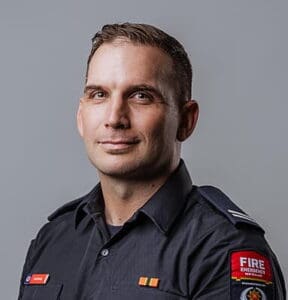
Andrew Chappell

National Manager Wellbeing
Fire and Emergency New Zealand
Andy Chappell is currently seconded from his role as Manager of Wellbeing to serve as the Implementation Lead of the Whanaungatanga Programme at Fire and Emergency New Zealand. With over 15 years of experience as a firefighter and officer, Andy brings a wealth of lived experience to his work. A passionate advocate for wellbeing, Andy is dedicated to listening to the frontline and amplifying their voices to improve the systems and processes that support wellbeing. He believes in empowering individuals to take ownership of their wellbeing journey and encourages engagement in activities that promote health and happiness.

Josh Darby

Project Lead - Whanaungatanga Programme & Senior-Advisor Organisational Development,
Fire and Emergency New Zealand
Josh Darby is a Senior Firefighter and Project Lead of the Movember-funded Whanaungatanga Programme. He applies 20+ years of frontline experience, along with research expertise, to ISO 45003-aligned, systems-level interventions that reduce psychosocial risk in Fire and Emergency NZ – including across the emergency Communication Centres. A 2017 Firefighters Scholarship recipient and NZ Health & Safety Awards Mental Health Champion, Josh focuses on turning evidence into practical, upstream controls that strengthen wellbeing and organisational culture.

Professor Tim Bentley

Professorial Chair in Mining Work Health and Safety & Director, MARS Centre. School of Business and Law,
Edith Cowan University
Professor Tim Bentley is an experienced, industry-engaged research leader, and his research has influenced policy and organisational practice within Australia and New Zealand.  In 2023, Tim took up the position of Director of the Mental Awareness, Respect and Safety (MARS) Centre within Edith Cowan University’s School of Business and Law.  The MARS Centre was created as part of a multi-million-dollar partnership between ECU and the State Government.  As both MARS Centre Director and Mining Work Health and Safety Professorial Chair, Tim leads a program of research, teaching and engagement designed to elevate mining sector WHS capability and to move the dial on sector culture towards greater respect and safety.  Prior to joining SBL, Tim’s New Zealand-based roles included Director of the New Zealand Work Research Institute, Director of Massey University’s Healthy Work Group, and Director of the Centre for Human Factors and Ergonomics at Forest Research.  Tim is also a former Editor-in-Chief of the Cambridge University Press publication, Journal of Management & Organization, and has served as Scientific Editor for the Elsevier international publication, Applied Ergonomics.  Tim’s impactful research primarily focuses on psychosocial risk, workplace bullying, older workers. Tim’s research has been supported by over AU$10M of external funding from government and industry within New Zealand and Australia, while his published research is extensive and has received considerable scholarly attention.

Suzi McAlpine

Founder and Director
Suzi McAlpine Leadership

Suzi is the founder and director of Suzi McAlpine Leadership. She’s a leadership developer, author, executive coach and speaker – supporting leaders and organisations throughout Australasia.

Author of the bestselling book, Beyond Burnout and the award-winning blog, The Leader’s Digest, Suzi is also the creator of The Leader’s Map, a blended leadership programme for organisations wishing to equip their emerging leaders with the necessary leadership capabilities for success. She has been featured in the Sunday Star Times, ONE News, TVNZ’s Sunday programme, Radio New Zealand, the NZ Herald and Inc. Magazine. Suzi is based in Nelson, New Zealand.

Dana Carver

Principal
Scarlatti
Dana is a Principal at the research and evaluation firm, Scarlatti, where she leads the organisational design portfolio. She has over 25 years’ experience in organisational wellbeing, strategy facilitation, and social research. To date she has served over 500 clients in the organisational design and wellbeing space. For the past 5 years, her focus has been on helping organisations identify and mitigate psychosocial risks and she and her team have designed a psychosocial risk assessment and benchmarking tool. Dana is also the co-creator and Chair of the Good Programmes Trust, home of the award winning GoodYarn program, which has seen over 20,000 people educated in mental health literacy. Dana holds a Bachelor of Psychology, with post-graduate studies in physiology, and practiced as a certified personal trainer, fitness instructor and wellness coach for many years. Outside of her career, she enjoys dabbling in art and has published two novels.

Jill Heaslip

Wellbeing and Psychological Health Advisor
Hato Hone St John | Aotearoa New Zealand
Jill has been a member of Hato Hone St John since 2006 and spent 16 years working as a frontline ambulance officer at various locations across Auckland and Northland. She transitioned to the HHStJ Wellbeing Team as a Peer Support Programme Advisor in mid-2022 and started her current role as a Wellbeing and Psychological Health Advisor in January 2024. Jill is a Registered Paramedic and is currently studying towards a Master of Health Psychology at the University of Auckland.

Dr Tessa Bailey

Chief Executive Officer & Principal Psychologist
The Opus Centre for Psychosocial Risk
Dr. Tessa Bailey is a leading expert in psychosocial safety and workplace mental health. As CEO and Principal Psychologist at the OPUS Centre for Psychosocial Risk, she develops evidence-based strategies to enhance worker health and productivity. With over a decade of experience in research and applied practice, her expertise involves building organisational systems and sustainable workplace interventions to better manage psychosocial risk. She has collaborated with diverse industries, government agencies, and academic institutions to create healthier and more productive workplaces. A published author and sought-after speaker, Dr. Bailey’s work has been cited in national policy reports, international publications and in 2019 she won the Ian Davey award for the most outstanding PhD thesis at the University of South Australia.

Hansini Gunasekara

Founder and Principal Consultant
Upthrive Leadership
Hansini Gunasekara is an organisational behaviour and leadership practitioner, researcher, and the Principal Consultant at Upthrive Leadership, where she develops evidence-based strategies to enhance psychological safety, leadership capability, and cross-cultural competency in organisations. Over the past decade, Hansini has partnered with organisations across diverse sectors to elevate leaders from early-career through to executive level, delivering training, coaching, and strategic guidance that enable leaders and their teams to stay engaged and perform effectively. She is currently completing her PhD in organisational behaviour at Auckland University of Technology, undertaking Aotearoa New Zealand’s first systematic research into psychological safety, with a particular focus on how leaders drive psychological safety within diverse teams. In addition to her consulting work, Hansini is an active contributor to thought leadership in her field. She regularly speaks on panels, facilitates workshops, and delivers talks and lectures in both industry and academic settings. She publishes peer-reviewed research as well as industry articles, and is deeply committed to bridging the gap between research and practice to create practical, real-world impact. Hansini brings a distinctive blend of extensive consulting expertise, in-house organisational development experience, and a research-backed, human-centered collaborative design approach to organisational behaviour and leadership. She holds a Bachelor’s (Hons) in Psychology (USA) and a Master’s in Research Methodology (UK), academic foundations that underpin her evidence-based practice. She is dedicated to helping organisations create environments where all people can thrive and belong.

Dr Philip Voss

Partner
Leading Safety
Philip is a respected leadership coach, facilitator, and speaker. Passionate about the role leaders can play in effecting positive change, Philip’s empathic approach and ability to translate the complex into the practical have contributed to his success in supporting organisational leaders lift their game when it comes to rangatiratanga (leadership) and manaakitanga (looking after people). Philip co-founded Leading Safety with Hillary Bennett in 2011 after careers in academia and professional services. Philip has a PhD in Psychology and is a member of the Institute of Directors in New Zealand.

Keri Woods

Partner
Leading Safety
Keri is an accredited Global Leadership Wellbeing Survey (GLWS®) practitioner who has a passion for helping senior leaders achieve their leadership potential by protecting and sustaining their wellbeing. Keri has a knack for asking the searching questions that take conversations where they need to go. Keri’s background is in human resources, organisational psychology, counselling, facilitation, and executive coaching. She holds an MA in psychology, a Post Graduate Diploma in Counselling, a Diploma in Teaching, and is a mother of three

Vanessa Matakatea

Senior Safety Manager – New Zealand
Linfox Australia and New Zealand
Vanessa is an experienced Safety, Health, and Wellbeing Leader with recognized success across various industries in Maritime, Telecommunications, Construction, Health and has recently joined the Transport and Logistics sector.  Vanessa recognizes the importance of enhancing the health and well-being of workers to achieve better safety outcomes, and more effective worker engagement and participation.  She does this by empowering the workers voice, applying her positive influence in leadership, and places significant focus on organizational culture, visible leadership, and effective working relationships.  Vanessa holds a Bachelor of Health Science in Psychology, a Diploma in Business Management, a Nebosh IGC in OSH and was awarded the 2023 Safeguard Practitioner of the Year.

Terry Buckingham

Chair, Workplace Wellbeing Professionals Association and
Wellbeing Lead, ASB
Terry holds a master’s degree in workplace health promotion and has held positions in both generalist Health and Safety roles and Wellbeing leadership roles.  As a strong advocate for improving wellbeing in workplaces Terry brings to us his experience from senior roles in Consulting,  Manufacturing, Tertiary Education and the Finance sector.  Terry heads up ASB Banks Wellbeing across its 6000 people in New Zealand.

Thanks to the 2025 Sponsors

Gold

Scarlatti

Heart and Brain Works

Exhibitors

Geneva Wellbeing

Umbrella Wellbeing

Clearhead

Supporting Organisation

HASANZ

Umbrella Wellbeing

Umbrella Wellbeing

Umbrella Wellbeing

Umbrella Wellbeing

Don't miss out on the connections and credibility boost!

Live B2B events are your chance to shine. Showcase your thought leadership, solidify your market position, and forge valuable connections with potential customers – all at once.

This exclusive event puts you in front of a highly skilled audience hungry for insights. Get ready for meaningful engagement that drives results.

Plus, we have some unique opportunities to put your company, products, and services in the spotlight.

Ready to take your brand to the next level? Contact us today to learn more or secure your spot at this leading event.

CT105

Workshop - to be announced

Workshop for NZ operational leaders, H&S, HR, and Wellbeing Professionals

PRE-CONFERENCE ON MONDAY 20 OCTOBER

This workshop you will cover:

Psychosocial risk is increasingly recognised as a key work health and safety concern in Aotearoa New Zealand, even though it is not yet as formally regulated as in Australia. But for many professionals, the big question remains: What can we actually do about it in practice – today?

This full-day, practical workshop is designed to equip H&S, HR, and wellbeing leaders with the tools, clarity, and confidence to move from confusion to meaningful action. Whether you’re just starting out or seeking to strengthen your organisation’s approach, this session offers grounded guidance tailored to New Zealand’s regulatory and workplace landscape.

Covering:

  • What you can do now: An overview of New Zealand’s current psychosocial risk obligations and opportunities under existing WHS law and WorkSafe guidance.
  • Building the business case: How to engage leadership by linking psychosocial risk to performance, reputation, and regulatory risk. Learn how to quantify psychosocial risk using available data, and demonstrate return on investment (ROI) through reduced absenteeism, improved retention, and enhanced productivity.
  • Real-world scenarios: Interactive case studies showcasing real-world scenarios from our audits or line manager training: reflect on root causes underpinning psychosocial hazards such as high workload or incivility, analyse how psychosocial hazards interact and what can be done to control them.
  • Applying the hierarchy of controls: Learn how to identify and implement controls—beyond posters and fruit bowls—and map them to a psychosocial risk-specific hierarchy.
  • Psychosocial risk management in action: What good looks like—from interviews with psychosocial risk inspectors and regulators.


You’ll Walk Away With:

  • A clear understanding of what’s expected in NZ under current laws and guidance.
  • The confidence and skills to put together a compelling business case for psychosocial risk management.
  • Tools and frameworks to assess and control psychosocial risks.
  • Real-world examples you can apply in your own context.
  • A strengthened ability to engage leaders and influence change


Who Should Attend:

Operational leaders and General Managers
Health and Safety Advisors and Managers
HR and People Leaders
Wellbeing, OD, and Culture professionals
Anyone responsible for psychosocial health and safety at work

Dr. Georgi Toma

Director

Heart and Brain Works

Workshop Leader is Dr Georgi Toma, who is a leading expert in psychosocial risk and workplace mental health.

She directs Heart Brain Works, supporting organisations across Australia and New Zealand to manage psychosocial hazards and build mentally healthy workplaces.

An honorary research fellow at the University of Auckland, she studies burnout, stress, and risk factors like poor leadership and bullying. Georgi created the Psychosocial Risk Maturity Scale™ and the Wellbeing Protocol, a validated program proven to reduce burnout and improve wellbeing.

Her work combines evidence-based strategy, legal compliance, and systems thinking to embed mental health into organisational culture, leadership, and work design. 

Known for her clarity, warmth, and deep subject-matter expertise, Georgi is a sought-after speaker, educator, and advisor. Her work is guided by the belief that mentally healthy work isn’t just possible – it’s essential for long-term organisational success, psychological safety, and human dignity.

PRE SALE

$ 1699 + gst
  • For valid ticket, payment by 4 July, 2025.

PRE-CONFERENCE WORKSHOP

$ 799 + gst
  • Separately bookable workshop on 20 October. For valid ticket, payment by 20 October, 2025.

CONFERENCE
DOUBLE PASS

$ 1599 Price Per Person + gst
  • Must be from the same organisation & book at the same time. For valid tickets, payment by 21 October, 2025.

CONFERENCE INDIVIDUAL TICKET

$ 2199 + gst
  • For valid ticket, payment by 21 October, 2025.

SUPER SAVER

$2199
$ 1799 + gst
  • For valid ticket, payment by 29 August, 2025.

DOUBLE PASS

$ 1599 + gst PRICE PER PERSON
  • Must be from the same organisation & book at the same time. For valid tickets, payment by 21 October, 2025.

EARLY BIRD

$2199
$ 1999 + gst
  • For valid ticket, payment by 19 September, 2025.

LAST MINUTE

$ 2199 + gst
  • For valid ticket, payment by 21 October, 2025.
Registration Conditions

Ticket Terms
All prices are in New Zealand dollars ($NZD)
A surcharge of 2.5% + GST applies to credit card payments on top of the total amount.
Pre-Sale Tickets are valid only for the specific event for which they were purchased and cannot be transferred to other events. To remain valid, Super Saver and Early Bird tickets must be paid by date quoted.
Group ticket options are valid for registrations from the same organisation, booked at the same time.
By selecting any special pricing offer for classes of organisation, sector, or individuals or using any promotion code, you are asserting to the organiser your right to claim any such pricing offer, and acknowledge the organiser’s right to audit such claim and, if in the opinion of the organiser using its sole discretion the conditions for special pricing are not met, reject any registration.

For full terms & conditions, please visit https://www.brightstar.co.nz/terms-and-conditions

Make an enquiry

Got questions? Write to us.

General Contact

This field is for validation purposes and should be left unchanged.
This field is hidden when viewing the form