
🏷️ SPRING SALE · Enjoy 15% off with promocode SPRING15

CV201 Stacked Logo WHITE@2x

24 - 25 February 2027 | Aotea Centre, auckland

Healthcare Funding & Financial Management Conference

This new event has been developed to support the development of a financially sustainable healthcare system in New Zealand. It will provide insights and expert analysis to enable improvements in both day-to-day financial management and financial planning to ensure the delivery of critical investment in the highest possible quality of care with available resources. 

This senior-level conference will examine how New Zealand healthcare can strengthen financial management, improve financial control, increase productivity, modernise funding and payment models, and deliver sustainable investment in the health system.

The event is built around four distinct themes

Financial Management Excellence

placeholder text

Financial Sustainability & Productivity

placeholder text

Funding, Commissioning & Payment Reform

placeholder text

Capital & Investment

placeholder text

KEY SPEAKERS FOR 2026

Our 2026 key lineup will provide insights and expert analysis

Speaker

Title

Company

Speaker

Title

Company

Speaker

Title

Company

Speaker

Title

Company

This conference will provide the insights and expert analysis that will allow delegates leave with the capability to:

1. Strengthen financial controls.
2. Improve financial intelligence and forecasting.
3. Make productivity measurable.
4. Align commissioning and payment with desired outcomes.
5. Build the financial foundations for long-term sustainability.

Who should attend Healthcare Funding and Financial Management?

  • CFOs and health sector finance directors

  • Finance managers and finance teams

  • Hospital and community service operations teams, general managers and service managers

  • Health-system capital planners

  • Planning and funding teams

  • Commissioning, procurement and contracting executives

  • Primary-care leaders

  • Finance transformation leaders

  • Health economists

  • Treasury Ministry of Health and Health NZ officials

  • Māori and community health providers

Venue

The location and how you can get there

Aotea Centre

50 Mayoral Drive, Auckland CBD

8:30

Registration and Coffee

9:00

Mihi whakatau

9:05

Welcome and opening remarks from conference MC

9:10

Analysing the financial challenge facing New Zealand healthcare

  • Shifting from the management of financial pressure to the creation of a financially sustainable health system

  • Examining the fundamental financial pressures facing New Zealand healthcare

  • How should financial sustainability be defined – can we ever reconcile increasing demand with constrained resources?

  • What should healthcare finance leaders be measuring differently?

  • How can financial management become an enabler of better healthcare rather than simply a mechanism for controlling expenditure?

9:50

Exploring the future of healthcare financial management in New Zealand

  • Building the finance function required for a modern health system - a strategic examination of how healthcare financial management needs to evolve

  • Moving from transactional finance to strategic financial management

  • Improving management information through the integration of financial, clinical and operational intelligence and using finance to support better resource allocation

  • Standardising financial processes and definitions

  • Building financial capability across operational leadership

  • Exploring the key financial management priorities for New Zealand healthcare

10:30

Morning refreshments

11:00

Building the architecture to enable better financial management, system modernisation and improvement

  • Exploring how New Zealand healthcare can achieve consistent, timely and actionable financial information

  • Analysing the systems and processes underpinning financial management

  • Establishing single sources of financial truth that connect finance, workforce, activity and clinical data

  • ERP and financial-management system optimisation

  • Examining cost-centre and service-line structures that can enable patient-level and activity-based costing

  • Improving management reporting through data integration, automation and the elimination of manual reconciliation

11:30

Strengthening financial controls: From compliance to financial assurance

  • Improving financial controls across a complex healthcare environment

  • Analysing delegated financial authority

  • Exploring procurement controls, contract controls, payroll and workforce expenditure controls and month end controls

  • Balancing control with operational agility

  • Where should controls be standardised across the system, and where should local discretion remain?

12:00

Panel discussion: Centralisation vs decentralisation: Who should control healthcare finance

A structured debate about achieving an operating model for financial and operational control

  • Examining the trade-offs between a centralised and a decentralised model

  • Which financial controls belong centrally?

  • Which decisions should sit with hospitals, regions or providers?

  • How much standardisation is necessary?

  • Does centralisation improve financial performance?

  • How can local accountability be retained?

  • What should the future operating model look like?

12:50

Lunch and networking

1:50

Understanding the complete financial equation: Connecting healthcare expenditure and revenue

  • Exploring the relationship between money coming into the system and money being spent

  • Understanding our revenue and funding flows – how money enters the system

  • Mapping expenditure – where the money goes

  • Improving revenue forecasting by linking activity, funding and expenditure

  • Understanding contribution margins and connecting clinical activity with financial consequences

  • Analysing the operational disconnect driving deficits - breakdowns in structural controls between revenue constraints and spending obligations

  • Can healthcare organisations accurately identify what services generate, consume and redistribute financial resources?

2:30

Improving budgeting and overspend management

  • Moving from annual budgets to active financial management

  • Delivering practical finance leadership to combines planning and budgeting and improve financial performance

  • Improving budgeting through better activity assumptions

  • Better enabling early identification of overspends to enable corrective action

  • Connecting budgets to strategic priorities

  • Managing budget holders and instituting greater budget accountability

  • Driver-based budgeting, zero-based budgeting, workforce budgeting

3:00

Improving healthcare financial planning

  • Exploring the latest development in the implementations of standards for budgeting and planning in healthcare

  • Understanding the relationship between financial planning and strategy in health and defining the role of the finance team in each

  • Understanding Investment Logic Mapping in the healthcare

  • Delivering Better Business Cases – when should this tool be used?

  • What is the role of the finance profession in supporting the quality of forecasting and financial planning at a sector level by developing the technical skills of non-financial staff and governance teams

3:30

Afternoon refreshments

3:50

Improving financial forecasting

  • How accurate can healthcare forecasting become?

  • From annual prediction to dynamic scenario planning

  • Undertaking effective cost-driver modelling

  • Building a forecast around changing demand, workforce and funding assumptions

  • How can we improve the measurement of accuracy of our forecasting?

4:20

Improving the monitoring of financial performance

  • What should healthcare actually be measuring to be able to provide greater insight than simply reporting whether an organisation is "on budget"

  • From financial reporting to management intelligence

  • Analysing the vast array of potential performance metrics:

  • Revenue performance
    Operating expenditure
    Forecast variance
    Cash position
    Cost per episode and cost per patient
    Workforce productivity
    Length of stay
    Emergency department activity
    Theatre utilisation
    Variation

5:00

MC summary remarks for end of Day 1, followed by networking reception

9:00

Welcome back from the conference MC

9:05

Achieving financial sustainability in New Zealand healthcare

  • Can the health system become financially sustainable in the absence of significant additional investment without continuing to compromise access, quality and equity?

  • Examining sustainability as a system-design challenge rather than simply a cost-reduction exercise

  • Aligning incentives across the health system to enable investments to be made in one area that will pay off elsewhere in the system and at a later date

  • Shifting the paradigm from treatment to prevention

  • How much can we influence demand through more effective prevention, earlier intervention and better care coordination – can this ever realised as savings to achieve system financial sustainability?

9:45

Improving the measurement and delivery of productivity of healthcare in New Zealand

  • Understanding productivity - how do we deliver more healthcare with the resources available?

  • Rationalising the measurement and monitoring performance - how do we integrate productivity within this

  • Productivity improvement: Turning financial pressure into measurable performance

  • Developing and reporting meaningful productivity measures and insights to understand productivity trends and drivers and manage productivity performance

  • Creating and reporting on progress against a Productivity Improvement Plan

  • Taking a patient pathway and system view to address the fundamental drivers of productivity

  • Addressing productivity within Hospital and Specialist Services – using data to identify outliers, address variation and target innovations to improve efficiency

  • Exploring the system level enablers and transformative shifts that have the potential to support long term changes in health service efficiency and productivity

  • Identifying the policies, processes and systems that can best support the health workforce to do the right things, for the right patients, at the right times, and in the right settings

  • Technology driven productivity – exploring the tools available to improve efficiency and reduce administrative burdens

  • Identifying the best ways to work differently and unleash innovation to lift system productivity

10:30


Morning break

11:00

Global health economics – what insights can be gained from international health systems?

  • Lessons for New Zealand's future healthcare funding and financing model

  • Comparing and analysing different international approaches to:
    Population-based funding
    Activity-based funding
    Capitation
    Outcome-based payments
    Risk-sharing
    Integrated funding

  • Which international systems could be adapted to New Zealand and what benefits would that deliver?

11:30

New Zealand healthcare funding model transformation and capitation reform

  • Exploring the evolution of New Zealand's funding architecture

  • Examining recent changes to the way we fund general practice through capitation funding and updates to the capitation formula that include factors that have an evidence-based effect on health outcomes

  • What should the next evolution of capitation look like?

12:00

Payment system Innovation: Designing the next generation of healthcare payments

  • What payment mechanism would create the strongest incentives for better healthcare outcomes in New Zealand?

  • Developing performance-based bunding: Paying for better outcomes

  • Moving from paying for activity to paying for performance

  • How much funding should be performance-linked?

  • What should be measured - process versus outcome-based performance measures

  • Exploring a range of practical issues with payment for performance
    Risk adjustment
    Provider risk
    Data quality
    Payment incentives
    System gaming
    Equity safeguards

  • Exploring the potential financial consequences of underperformance and the impact this could have

12:30

Lunch

1:30

Buying better healthcare: Improving commissioning, contracting and procurement in New Zealand

  • Developing new commissioning models that can drive transformation in New Zealand’s health and care system

  • Building New Zealand’s strategic commissioning capability

  • Redesigning healthcare commissioning and contracting around outcomes rather than activity

  • Improving the relationship between funders and providers

  • Managing contract underperformance

  • Shaping performance and outcome measures that help drive continuous improvement in the commissioning process

  • Ensuring the voice of consumers and whanau is built into the commissioning, planning and funding system to shape services that meet the needs of communities

2:10

Capital planning and delivering healthcare infrastructure investment

  • Making better long-term infrastructure decisions in healthcare

  • Delivering the Health infrastructure plan setting out the investment priorities for the national approach to rebuilding and maintaining hospitals and health services to meet future population needs

  • Delivering Building Hospitals Better

  • Moving from operating budgets to the capital balance sheet

  • Improving the accuracy of capital expenditure forecasting

  • How do we turn capital plans into delivered infrastructure - enhancing the standard and performance of the delivery of projects

  • In a resource constrained environment how can capital, maintenance, operational change, digital investment and workforce decisions be effectively brought together through integrated planning

2:45

MC closing remarks and end of conference

3:00-6:00

Separately Bookable Workshop - Business Case Masterclass

Making the Financial Case for Healthcare Investment

How to build an investment case that survives financial, clinical and executive scrutinyIn this highly practical workshop. Participants work through:

Strategic case

Economic case

Financial case

Commercial case

Management case

Options appraisal

Cost-benefit analysis

Whole-of-life costing

Demand assumptions

Workforce assumptions

Sensitivity analysis

Benefits realisation

Risk and contingency


Workshop scenario: Delegates will develop the financial case for a new healthcare service/infrastructure investment.


Stay tuned for the 2027 Speakers

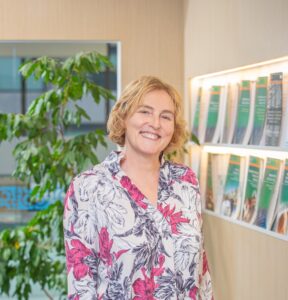
Professor Claudia Geiringer

Commissioner
Te Aka Matua o te Ture | Law Commission
Professor Claudia Geiringer is a Commissioner at Te Aka Matua o te Ture | Law Commission. She leads the Commission’s review of the Criminal Procedure (Mentally Impaired Persons) Act 2003. Claudia holds the Chair in Public Law at Te Herenga Waka Victoria University of Wellington (a role from which she is currently on leave). During her career, Claudia has practised, taught and published on numerous aspects of public law including bills of rights/human rights, electoral law, parliamentary practice, reception of international law, citizenship and immigration, social security and comparative constitutional law. Claudia is a Fellow Ahurei of the Royal Society Te Apārangi and a barrister and solicitor of the High Court of New Zealand.

Riwhi Kenny

Facilitator
InsideOUT Kōaro
Riwhi (he/him/ia) is takatāpui and tangata ira tāne and has whakapapa to Kai Tahu, Te Ātiawa, and Te Ātiawa o Te Waka-a-Māui as well as Greece and Te Whenua Moemoea. He’s been involved in rainbow community spaces since 2014, as a young person and QSA leader, a volunteer, a staff member, and a facilitator, as well as community mental health spaces for years. Riwhi is currently doing a Masters of Indigenous Studies degree at Te Herenga Waka Victoria University, looking at storytelling as a resource for healing. He cares a lot about reindigenisation, storytelling, building community, and the power of peer support and lived experience. He is also on 3 different boards, across rainbow kaupapa, mental health spaces, and artistic spaces. When not studying, facilitating, or at a board meeting, Riwhi writes his own tabletop roleplaying games, and can often be found playing TTRPGs, learning about wetlands, crocheting, and reading.

Dr Tracey Pons

Chair
Physiotherapy New Zealand (PNZ) , Physiotherapy in Mental health specialist interest group (PiMH)
Tracey is the first registered Physiotherapy Pain Specialist in New Zealand. This designation was awarded in 2016. She currently chairs the PNZ, PiMH group which is also an active member of the International Organisation for Physiotherapy in Mental Health (IOPTMH). Tracey belongs to the IOPTMH Education and clinical practice committee. PiMH group has a passionate commitment to improve well-being in all contexts, and to encourage the collaboration of physiotherapists with the broader interdisciplinary team in the management of mental health.

Kevin Harper

CEO
Changing Minds

Serena Lal

Chief Executive
Kites
Serena Lal (she/her) leads Kites Trust, a peer‑led organisation with more than twenty years of experience standing alongside people navigating mental distress, addiction, disability, and the social conditions that shape wellbeing in Pōneke. Kites is a trusted presence across hospital and community settings, working with services to strengthen peer‑led cultures and uphold Tāngata Whai Ora leadership. Serena is a disabled Fijian Indian woman, Tangata Whai Ora, and a descendant of the Girmityas. Her whakapapa and lived experience shape how she understands harm, accountability, and the realities of navigating mental health and disability systems. With a background in public health and community‑led design, she focuses on making systems easier to understand and supporting organisations to respond in ways that reflect the everyday realities of the people they serve. Alongside her mahi at Kites, Serena has founded and co‑founded kaupapa centred on community power and hauora‑led change. Her work sits at the intersection of lived experience, public health, and justice‑led design, with a clear focus on strengthening community‑led and Tāngata Whai Ora‑led approaches to mental health in Aotearoa.

Hon Matt Doocey

Minister for Mental Health and Associate Minister of Health
Hon Matt Doocey is the Minister for Mental Health and Associate Minister of Health. Matt has been the MP for Waimakariri since the 2014 election. He previously worked in mental health in New Zealand and the UK, before returning home to work at the Canterbury District Health Board. Matt went to St Bede’s College before completing a BSc (Hons) in Social Policy, an MA in Healthcare Management from Kingston University in London, and an MSc in Global Politics from Birkbeck College, University of London

Ingrid Leary

Labour MP for Taieri and Labour’s spokesperson for Mental Health and Seniors
Labour
Ingrid Leary is the Labour MP for Taieri and Labour’s spokesperson for Mental Health and Seniors. Before Parliament she collected careers the way some people collect hobbies—working as a lawyer, journalist, broadcaster and in international development—giving her a healthy scepticism of simple answers to complex problems. Ingrid is on a mission to drag mental and social health policy into the age of evidence. She has an enduring obsession with measuring the right stuff—not just the easy stuff—and is forever asking, “How do we know this is actually working?” If you’ve got a better dataset, she’ll probably want to see it. If you’ve got a better question, even better. She believes the best mental health policy is grounded in lived experience, informed by good data and judged by whether it genuinely improves people’s lives. Fortunately for today’s panel, she’s always happy to challenge conventional wisdom—and herself—in pursuit of better answers.

Dr David Codyre

Clinical Lead Mental Health
Tamaki Healthcare

Kerri Butler

Founder
Take Notice
Kerri Butler (Ngāpuhi, Ngāti Porou) is the founder of Take Notice established in 2014 as a Māori, lived experience and whānau-led organisation. Kerri was both a founding member and the Inaugural Powhakahaere of Te Kete Pounamu (National Organisation of Māori with Lived Experience).  She holds a Master’s in Public Health (1st Class Honours) and has served in influential roles on national boards and advisory groups, including as Co-Chair of the Mental Health Act Advisory Group and the Health and Disability Standards Review Committee. Energetic and passionate, she approaches her work with a deep commitment to equity, social justice, and the transformative power of lived experience.

Lee Colquhoun

Chief Operating Officer Organisation
Te Puna Ora o Mataatua
Lee Colquhoun grew up in Ahipara in the Far North, with whakapapa to TiTi Marae on the East Coast. After completing university in 2012, he built a diverse career spanning more than 15 years across business operations, maintenance services, sales leadership, and executive management. Lee’s executive experience includes aquatic centres, fitness facilities, and alpine resorts across both New Zealand and Australia. Since returning to New Zealand over a decade ago, Lee has dedicated his career to strengthening Māori-led organisations and communities. For the past six years, Lee has served as Chief Operating Officer of Te Puna Ora o Mataatua (TPOOM), one of New Zealand’s largest regional Māori providers, and from 1 July he steps into the role of Chief Executive Officer for Te Puna Ora o Mataatua Ltd. Alongside his executive responsibilities, Lee serves on several regional and national governance boards including, Te Ara Poutama, Tauranga Community Housing Trust and Te Matapihi, contributing to the housing and Māori workforce development sectors. Lee is passionate about building a strong, capable workforce, strengthening rural services, and driving innovation across the heath and social sectors. Lee is committed to ensuring that factors such as rurality and deprivation are never barriers to accessing quality services and believes in creating equitable opportunities for all whānau communities.

Gary Wynn

Consultant Psychiatrist,; Professor of Psychiatry and Neuroscience,
Ecdysis Clinical Psychedelic Therapy; Uniformed Services University of the Health Sciences
Dr G Wynn is a consultant psychiatrist and founder of Ecdysis Clinical Psychedelic Therapy Limited in Wellington, providing psychiatric and psychedelic treatment services. Previously a senior medical officer at Capital and Coast DHB, he founded Wellington Regional Hospital’s ketamine clinic for PTSD and depression. He is Professor of Psychiatry and Neuroscience at the Uniformed Services University, a retired US Army Colonel, and an internationally published expert in PTSD, psychiatry and mental health, with over 100 publications.

Judy O’Brien

CEO
Inside Out

Want to connect with this health sector audience?

Take the unique opportunity to engage with a highly qualified health sector audience.
There are some exclusive opportunities to promote your company, products and services.

Contact sponsorship@brightstar.co.nz for more information.

Umbrella Wellbeing

Silver sponsors

Umbrella Wellbeing

Umbrella Wellbeing

Umbrella Wellbeing

Umbrella Wellbeing

Tickets

Super Early Bird

.
$2100
$ 1500 + gst
  • For valid ticket, payment by 30 October, 2026.

Group 3+

Price Per Person
$ 1500 + gst
  • Must be from same organisation & book at the same time. For valid tickets, payment by 24 February, 2027.

Virtual

Price Per Person
$ 1400 + gst
  • Must be from same organisation & book at the same time. For valid tickets, payment by 24 February, 2027.

Early Bird

.
$2100
$ 1700 + gst
  • For valid ticket, payment by 18 December, 2026.

Standard Price

$2100
$ 1900 + gst
  • For valid ticket, payment by 27 January, 2027.

Last Minute

.
$ 2100 + gst
  • For valid ticket, payment by 23 February, 2027.
Registration Conditions

Ticket Terms
All prices are in New Zealand dollars ($NZD)
A surcharge of 2.5% + GST applies to credit card payments on top of the total amount.
Super Early Bird Tickets are valid only for the specific event for which they were purchased and cannot be transferred to other events. To remain valid, Super Early Bird, Early Bird, Standard and Last Minute tickets must be paid by date quoted.
Group ticket options are valid for registrations from the same organisation, booked at the same time.
By selecting any special pricing offer for classes of organisation, sector, or individuals or using any promotion code, you are asserting to the organiser your right to claim any such pricing offer, and acknowledge the organiser’s right to audit such claim and, if in the opinion of the organiser using its sole discretion the conditions for special pricing are not met, reject any registration.

For full terms & conditions, please visit https://www.brightstar.co.nz/terms-and-conditions

Want to join this conference?

Register your interest, we will be in touch when tickets are available.

Make an enquiry

Got questions? Write to us.
General Contact

This field is for validation purposes and should be left unchanged.